You’ve got a product ready to sell, but the route to market isn’t obvious. Should you list it on a large marketplace, place it in a specialist community, promote it through social commerce, test demand with local buyers, or build an online shop you control?
The best answer depends on your product category, audience, margin, fulfilment capacity and tolerance for platform rules. Online places to sell can provide immediate discovery and buyer trust, but they also bring fees, competition and limited ownership of the customer journey. Your own website gives you more control over branding, data, merchandising and repeat purchases, although you’ll need to create or attract the demand yourself.
This comparison looks at buyer reach, fee structure, discovery, seller protection, fulfilment and operational workload. Marketplaces are usually the faster way to test demand. An owned website becomes more valuable when you need a stronger brand home and a direct route from visitor to customer. For sellers who need that web presence without managing separate domain, SSL, hosting and maintenance suppliers, 1stNet.AI can launch a managed website within 24 hours, with support included.
Amazon.co.uk is the strongest option when your priority is scale, search demand and fulfilment convenience. It suits branded products, repeatable inventory and retailers that can handle product compliance, stock discipline and intense competition. The platform’s built-in buying intent is powerful, but selling there means accepting Amazon’s rules and a commercial model that can affect margins at every stage.
You can choose between Individual and Professional selling plans, with category-based referral fees and separate fulfilment costs. The detailed fee structure matters because the profitable price for one category may be unsuitable in another. Sellers can also use advertising, coupons and deals, but visibility often depends on active merchandising rather than only uploading a catalogue.
Fulfilment by Amazon, commonly called FBA, can reduce the burden of picking, packing, delivery and returns. It can also make eligible offers more attractive to Prime shoppers. That convenience comes at the cost of storage, fulfilment and handling charges, plus less control over the customer experience.
Best fit for scale
Amazon works well when you’ve got reliable supply, standardised products and enough margin to absorb marketplace and fulfilment costs. It’s less forgiving for fragile, highly customised or slow-moving items.
Reach: Broad marketplace demand and strong product-search behaviour.
Control: Limited control over branding, customer ownership and policy decisions.
Workload: FBA can simplify logistics, while listings, stock and compliance still need close attention.
Trade-off: Faster access to buyers, but heavier competition and greater dependence on Amazon’s systems.
Before committing stock, model referral, fulfilment, storage, advertising, packaging and return costs together. If you’re also considering a branded store, this guide to how to start an online store explains the owned-site route.
Sell through Amazon Seller when scale justifies the operational discipline. Keep your own website in view if Amazon is likely to become your only source of demand.
2. eBay.co.uk
eBay.co.uk suits UK sellers whose stock does not fit one narrow category. Refurbished electronics, pre-owned goods, vintage items, discontinued parts and accessories can all reach relevant buyers. The platform also lets you choose between auction and fixed-price selling, which makes pricing strategy part of the listing decision.
Match the format to the stock
Fixed-price listings work well for replenishable products with a known margin. Auctions make more sense for scarce, unusual or hard-to-value items where competition may establish the price. An auction can also finish below expectations if demand is weak, so use it selectively.
eBay offers tools for promotions, advertising and performance management. Business seller fees vary by category, while performance adjustments and seller tiers can change account economics. Top-rated Seller benefits may reward reliable dispatch, accurate descriptions and good service, but meeting those standards requires consistent operations.
Reach: A broad UK audience buying new, used and niche products.
Fee variability by category: Calculate the applicable selling, postage, advertising and return costs before setting a price.
Auction versus fixed price: Use fixed price for repeatable stock, auctions for genuine scarcity or uncertain value.
Customer-sourced disputes: Buyers can raise issues about condition, delivery or returns, so descriptions, photographs and tracking need to support your position.
The platform gives you more listing flexibility than a rigid product catalogue, but buyers compare similar offers quickly. A small difference in postage, condition or returns policy can decide the sale.
Read the current rules at the eBay Seller Centre before pricing products. eBay can validate demand without building a full website first, but seller-managed packing, dispatch and returns still require time and working capital. Include those costs in every margin calculation.
3. Etsy UK
A personalised wedding sign, illustrated print or handmade gift needs a different selling environment from a generic household item. Etsy is built around creative products with a clear story, handmade character or custom option, making it a practical fit for makers, illustrators, craft suppliers, designers and gift sellers. Buyers arrive looking for something distinctive, so strong photography and clear personalisation details can support discovery.
Its tools include Etsy Payments, shipping profiles, personalisation and advertising. Together, they can turn bespoke work into a repeatable catalogue. The operational cost is communication: custom orders may involve questions, proofs, revisions and production scheduling. State processing times clearly. Buyers may accept a longer wait for a personalised item, but uncertainty after purchase creates avoidable service problems.
Creative labour belongs in the price. Treat design time and custom revisions like material costs, or personalised orders can erode margin. Etsy also charges through several components, including listing, transaction, payment processing and regulatory charges. Account for packaging, postage, refunds and advertising when deciding whether a product earns enough for the work involved.
Match discovery to the product
Etsy earns its place when search discovery and gift-led browsing help a creative product find buyers. Generic goods have less protection from price comparison because customers can locate similar items elsewhere.
Audience: Buyers seeking handmade, vintage, personalised or creative products.
Discovery: Titles, tags, photographs and personalisation information need to match buyer intent.
Operations: Custom work demands more messaging, proofing and production coordination.
Trade-off: Relevant discovery and international reach, balanced against multiple fees and competitive search results.
Payment setup also affects the experience if Etsy sits alongside a separate store. A suitable website payment gateway can support card and alternative payment flows outside the marketplace, while a standalone site gives more control over customer journeys and repeat sales.
Start with Etsy’s UK seller platform when the product has a clear creative fit. Use it to test demand and reach relevant buyers, but calculate the hourly value of the work before accepting custom orders.
4. OnBuy
OnBuy gives UK retailers another route to general marketplace reach, with subscription tiers, category-based selling fees and optional promotional exposure. It suits sellers who want to test an additional channel before committing to a standalone store, particularly where existing catalogue and fulfilment processes can be reused.
The commercial choice sits between simplicity and control. Standard, Partner and Professional options provide different tools and store features, while API connections and integrations become useful when manual catalogue or order updates take too much time. The optional Boost Level can improve exposure, but it adds a promotional cost and means sellers must assess whether extra visibility produces profitable orders.
OnBuy’s audience is narrower than the largest generalist marketplaces. That can mean less direct competition in some categories, although sellers still need accurate titles, strong product images and delivery terms that compare well. A smaller audience also means weak listings may receive fewer opportunities to prove demand.
Test the channel against your operation
OnBuy works best as a measured addition to a retailer’s existing mix. It can spread order volume across more than one marketplace, but it still requires stock accuracy, customer service and reliable dispatch.
Audience: A UK-focused marketplace covering a broad range of products.
Fees: Subscription and category selling costs, with optional spend for promotion.
Control: More listing and store control than some large marketplaces, but less customer ownership than a website.
Systems: Integrations help when catalogue size or order volume makes manual administration inefficient.
Best fit: Retailers with repeatable fulfilment and products that already convert through marketplace search.
Check the current commercial terms in OnBuy’s seller information. List a focused range first, then compare profit per order, time spent managing the channel and the quality of demand with your existing marketplaces. If the test depends on frequent paid promotion, a website may offer better long-term control, provided the seller can generate its own traffic.
5. Not On The High Street
Not On The High Street, often shortened to NOTHS, suits established makers and polished small businesses selling curated gifting and personalised products. Its buyers expect distinctive, presentable items, so product design, photography, packaging and brand presentation need to support a premium gifting proposition.
Acceptance is application-only. That creates an entry barrier, but also gives the marketplace a more edited environment than a general catalogue. Editorial curation and merchant tools can bring visibility beyond keyword search. Once accepted, centralised order management and weekly payouts can reduce routine administration.
The trade-off is margin. Commission is higher than on generalist marketplaces, so pricing must cover materials, labour, packaging, postage, customer service and returns. A product that earns well on a lower-cost channel may deliver less profit here after marketplace costs.
Choose NOTHS for curated gifting demand
NOTHS makes sense when marketplace association strengthens perceived quality and supports occasion-led buying. Acceptance is not guaranteed, and generic or heavily price-led ranges are unlikely to fit its positioning.
Best products: Personalised gifts, occasion-led products and distinctive home or lifestyle items.
Buyer fit: Customers seeking a considered present, rather than the lowest available price.
Operational demand: Accurate product information, dependable production and polished fulfilment.
Trade-off: Relevant gifting traffic and brand credibility, balanced against application limits and higher commission.
Apply through Not On The High Street after checking that each product has a clear gifting reason. The channel can work well for sellers who can maintain presentation standards and protect margin. If that operational effort outweighs the value of curated exposure, a more open marketplace or a website may offer a better fit.
6. Folksy
A maker selling from a UK workshop may value relevant buyers more than global reach. Folksy is a UK marketplace for handmade goods, with a smaller community and simpler domestic delivery expectations than an international platform. That focus can make customer communication and postage easier to manage.
Folksy offers Pay-as-you-go and Folksy Plus. Pay-as-you-go fits occasional sellers testing a product or selling a limited range. Folksy Plus allows unlimited listing and relisting under the same sales commission structure, which can suit a broad catalogue or frequent seasonal updates. Forums, seller education and UK-focused curation provide useful support, although makers still need to promote their own shops.
The audience is smaller than Etsy’s, so passive discovery may be limited, particularly for a new shop with few reviews. Sellers may need to bring visitors through Instagram, craft events, email or an existing website. That extra marketing work is the main operational trade-off.
Choose Folksy for UK maker relevance
Folksy suits products that benefit from a handmade identity and domestic buyer context.
Audience: UK customers looking for handmade and maker-led products.
Pricing: Pay-as-you-go suits occasional sales; a subscription can suit larger or frequently changing ranges.
Control: The community fit is stronger than on a general marketplace, but the platform still controls the customer relationship.
Trade-off: Relevant positioning and practical support, balanced against a smaller audience and the need for self-promotion.
Browse Folksy before opening a shop. Check whether the platform’s customer language matches your products, then compare the likely exposure with the work of creating content and driving traffic. Folksy is a sensible marketplace route for makers who want UK relevance and manageable listing choices. A website offers more control, but requires the seller to create demand and handle more of the selling process.
7. Depop
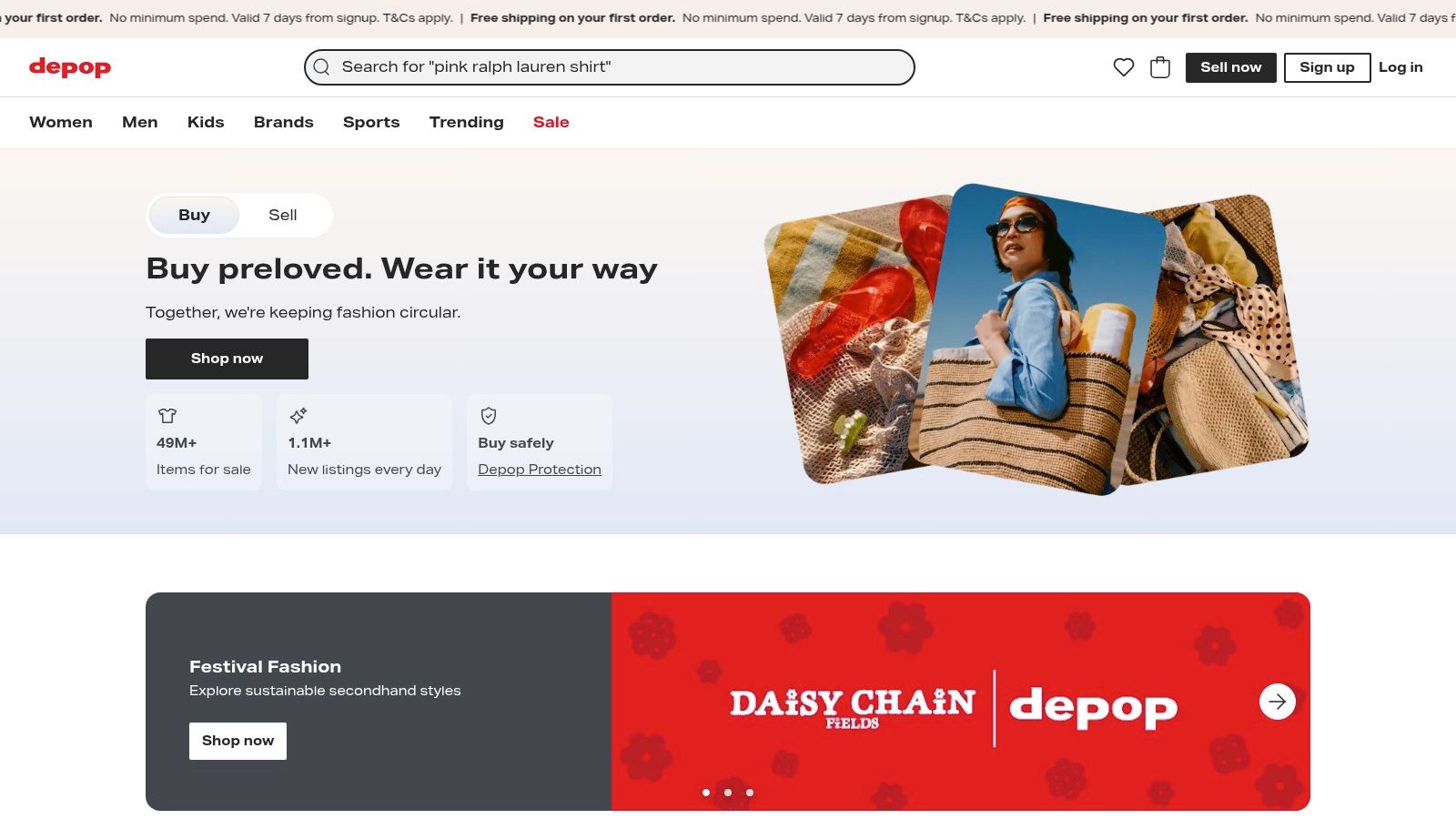
Depop suits sellers whose stock needs visual context to attract attention. It is a mobile-first social marketplace for fashion resale, vintage clothing and indie labels, where styling, photography and the overall shop feed can matter as much as the garment itself. A curated vintage edit or distinctive independent label has more scope to stand out than ordinary, widely available clothing.
The platform supports in-app chat, social interaction, bundles and discounts, which can encourage negotiation and repeat browsing. Shipping label options may simplify dispatch, but sellers still need accurate measurements, clear condition notes, suitable packaging and prompt replies. Common items face strong competition and price sensitivity, so weak images or vague sizing can quickly reduce interest.
Depop’s UK fee model has changed. The 10% selling fee removed for UK listings and a buyer-side marketplace fee introduced means sellers should check the current terms and consider how buyer-facing charges affect the displayed price and conversion.
Presentation is part of the product. Consistent backgrounds, useful measurements, honest grading and a recognisable feed help buyers judge both the item and the seller.
Choose Depop when your range is fashion-led and you can maintain regular, visually strong listings. Its audience is fashion-focused and comfortable shopping through mobile feeds, while discovery depends on social engagement and trend relevance. Fulfilment remains the seller’s responsibility, including grading, packing and dispatch.
The trade-off is clear: Depop offers accessible listing tools and a strong cultural fit for visual fashion, but limited reach beyond that category and intense competition for ordinary stock. Use Depop for vintage, styled or distinctive fashion inventory rather than unrelated products.
8. Vinted
For a wardrobe clear-out, a box of accessories or selected household items, Vinted offers a quick route to peer-to-peer resale. UK sellers generally pay no standard selling fee, while the buyer pays Buyer Protection. That keeps the cash cost of listing low, although time, packaging, postage, negotiation and unsold stock still affect the return.
Its main advantage is reduced administration. Sellers can create listings from a phone, choose integrated delivery options and handle messages in one app. That suits occasional selling and a small resale stream. It gives you less control over merchandising, brand presentation, customer data and the wider buying journey, so it is a poor fit for a range that needs explanation or repeat-purchase planning.
Match the channel to the stock
Vinted works best for items that can be photographed, described and dispatched without much preparation. Common products may face strong price competition, and visibility can vary as listings move through fast feeds.
Best fit: Second-hand clothing, accessories and selected lifestyle goods.
Cost lens: No standard UK seller commission, but fulfilment and seller time remain operating costs.
Operational demand: Low to moderate for casual selling, rising with stock volume, customer queries and regular dispatch.
Control: Limited control over branding, customer relationships and repeat sales.
Commercial route:Vinted Pro is available, but businesses and sole traders must meet extra obligations and follow the relevant policies.
Use Vinted when speed and convenience matter more than building a distinct retail presence. If you sell regularly as a business, check the current rules on Vinted UK and treat compliance, accurate descriptions, receipts and returns as part of the operating model. For a branded range or planned customer journey, a website or broader marketplace may justify its extra work.
9. TikTok Shop UK
TikTok Shop UK suits products that make sense in motion. A demonstration, comparison or live explanation can create demand before shoppers search, giving sellers access to discovery beyond standard marketplace results. The trade-off is a continuing need for usable content, reliable stock and quick operational decisions.
The platform combines short-form video, live shopping, an in-app catalogue and a creator or affiliate marketplace. Fulfilment can use Fulfilment by TikTok, Shipped-by-Seller and platform-supported arrangements, with each option changing control over stock, dispatch, returns and coordination. Category-based commission and platform charges also affect margin. Shipped-by-Seller orders have a £0.50 per-package platform fee from 15 July 2026, according to the seller information supplied for the channel. Confirm the current charge before forecasting orders.
A product catalogue alone will not create traction. Someone needs to plan and publish videos, answer comments, monitor live sessions, coordinate samples or affiliates and respond to customer service issues when a post increases demand quickly.
Operational reality: A viral product video is useful only when stock, dispatch and returns can handle the attention.
Use TikTok Shop when your product is easy to show and your team can maintain a regular content cycle. A narrow range is safer than uploading a large catalogue before testing fulfilment and customer response.
Discovery: Strong potential through video, creators and live events.
Control: Checkout remains inside the platform, limiting ownership of the wider customer journey.
Workload: Content, live selling, fulfilment and support continue after launch.
Trade-off: Fast audience discovery in exchange for demanding content and operational work.
A spare room full of furniture, equipment or clearance stock needs a different route from a branded product range. Facebook Marketplace suits sellers who want local validation, collection-only sales and quick feedback from nearby buyers. Listings can reach people in the area, while Messenger keeps questions and negotiations in one conversation.
The practical advantage is testing demand before committing to delivery, a larger catalogue or paid promotion. Buyers may reveal whether the price, condition, dimensions, collection time or delivery options are putting them off. That feedback is useful, but enquiry volume varies. One well-presented listing can attract rapid responses, while another receives little attention, so Marketplace is a testing channel rather than a dependable foundation for a growing brand.
Local listings do not carry listing fees. The seller still manages trust, payment, collection and handover. In-app checkout may be available in some areas and can involve transaction fees, while shipping access is limited. Support and seller protection are less structured than on marketplaces with managed checkout, fulfilment or escrow-style processes.
Use Marketplace when the item is bulky, the buyer is nearby, or direct negotiation protects the margin. Keep the listing precise, including condition, dimensions, collection location and acceptable payment method.
Best fit: Furniture, equipment, clearance stock and collection-only items.
Buyer insight: Direct conversations expose objections before wider investment.
Control: The seller sets the price, collection terms and handover process.
Trade-off: Local speed and useful feedback, with uneven discovery and greater responsibility for risk.
List through Facebook Marketplace when local collection or delivery makes the economics work. For higher-value goods, agree payment terms and meet in a public place where possible before handing over the item. Collection convenience does not verify the buyer.
Top 10 UK Online Selling Platforms Comparison
Platform
Core features (✨)
Target audience (👥)
UX / Quality (★)
Pricing & fees (💰)
When to choose (🏆)
Amazon.co.uk (Seller)
FBA, Prime, ads, category rules ✨
Brands & retailers seeking scale 👥
★★★★☆ High conversion; complex policies
💰 High (referral + FBA + ads)
🏆 Massive reach & Prime visibility
eBay.co.uk
Auction + fixed-price, promos, seller tiers ✨
General sellers, used & varied inventory 👥
★★★☆☆ Mature UX; variable trust
💰 Variable (listing & final fees; performance)
🏆 Flexible formats; strong UK audience
Etsy (UK)
Handmade/vintage focus, payments, shipping ✨
Creators, makers, personalised gifts 👥
★★★★☆ Niche discovery; competitive
💰 Listing + transaction + processing fees
🏆 Audience seeking unique, handcrafted items
OnBuy
Subscriptions, Boost exposure, UK-centric ✨
Retailers wanting a UK alternative to big marketplaces 👥
★★★☆☆ Simpler setup; smaller buyer base
💰 Transparent subs + category fees
🏆 Seller-friendly UK marketplace with clear pricing
🏆 Rapid viral reach via short-form video & live sales
Facebook Marketplace
Local listings, Messenger negotiation, in-app checkout ✨
Local sellers, bulky goods, demand-testing 👥
★★★☆☆ Huge reach; limited protections
💰 Free local listings; checkout may incur fees
🏆 Quick, low-cost way to validate local demand
Choose Your First Selling Channel
The right first channel is the one that matches your product and your ability to operate it consistently. Choose Amazon or eBay when broad demand, established buying behaviour and scale matter more than full control of the storefront. Amazon is stronger for repeatable stock and fulfilment support. eBay is more flexible for mixed, used, refurbished and unusual inventory.
For handmade, personalised and giftable products, start with Etsy, Folksy or NOTHS. Etsy offers international discovery and a large creative marketplace. Folksy is more focused on UK makers and community support. NOTHS suits polished products with a premium gifting position, but its application process and higher commission make it a more selective route.
Fashion sellers have a clearer split. Depop suits trend-led presentation, vintage edits and social discovery. Vinted is better for fast peer-to-peer resale and clearing stock with a simple listing process. Use TikTok Shop when content, creators and live selling are central to how you’ll generate demand. Choose Facebook Marketplace for local testing, bulky goods, collection-only products and quick feedback on price.
Before choosing, calculate your full cost per order. Include platform fees, advertising, packaging, postage, payment handling, refunds, returns and the time spent photographing, listing, messaging, picking and packing. A channel with no seller commission can still be expensive if it consumes hours or produces frequent negotiation. A channel with higher fees can still work if it delivers better-intent buyers or removes fulfilment work.
The cheapest listing fee isn’t the same as the lowest cost of sale.
Add an own website when you need stronger brand control, a direct customer journey, clearer ownership of the storefront or a central home for traffic from several marketplaces and social channels. An owned store won’t automatically supply demand, but it gives you a place to explain your proposition properly, build trust beyond platform reviews and create a consistent route for repeat purchases.
The UK market is already mature. Online marketplaces and peer-to-peer platforms represented just under a third of UK online retail spending, with a £34.1 billion gross merchandise value excluding VAT in 2025, while growth between 2024 and 2025 slowed to 3.7% according to Mintel’s UK online retail marketplaces market report. That combination matters. Marketplaces remain enormous, but sellers shouldn’t assume that listing everywhere is a strategy. Margin, control and operational resilience deserve equal attention.
Consumer preference also supports a marketplace-first test for many sellers. A 2021 survey of 1,000 British consumers found that 68% considered marketplaces the most convenient way to shop, 52% preferred ecommerce sites that included a marketplace, and 94% expected to use marketplaces at the same rate or more in the future, as reported in Mirakl’s UK consumer survey coverage. Use that existing demand to test products, then build your own customer journey when dependence on one platform starts to restrict growth.
For a fast, supported web presence, 1stNet.AI can launch a website within 24 hours with domain registration, SSL, hosting, maintenance and support included. Its team offers an interactive live chat system to design the website, and delivered work comes with a 30-day money-back guarantee. That route is relevant when you need a managed online store or branded website without coordinating separate technical suppliers.
The practical sequence is simple. Start with the channel where your buyers already browse, measure profit rather than order volume, document the work required to fulfil each order, then add an owned website when control and repeat business justify it.
1stNet AI Ltd offers managed, SEO-friendly websites and online stores with domain registration, SSL, hosting, maintenance and ongoing support included, with an accelerated launch option within 24 hours. Visit 1stNet AI Ltd to discuss a fast web presence that gives your marketplace activity a branded home.