
You’re ready to start taking bookings. You know the dogs, the routes, the timing between school runs and lunchtime walks. Then the naming job stalls everything, because the options on your list sound generic, over-the-top, or too similar to another local walker.
That pause is common, and it matters more than many new owners expect. Your business name appears first across Google Business Profile listings, Facebook pages, flyers, van signage, invoices, WhatsApp chats, and your website. If it is forgettable, hard to spell, or unclear about what you offer, people move on fast.
A good dog walking business name needs to do more than sound nice. It should match your service style, give owners confidence, and hold up in the practical checks that come next, such as business registration, local competitors, social handles, and domain availability.
That’s the angle of this guide. The names are grouped by style so you can choose one that fits the kind of brand you want to build, from friendly and playful to polished and premium. Each category also connects to the next step after naming: shaping your branding, choosing a domain, and getting a simple website live without wasting a week going in circles.
Table of Contents
- 1. Catchy & Modern. Paws & Strides
- 2. Playful & Creative. The Pooch Parade
- 3. Professional & Trustworthy. Leash & Lead
- 4. UK & Localised Focus. The Cotswold Walker
- 5. SEO-Friendly & Direct. Your Town Dog Walkers
- 6. Luxury & Premium. The Urban Pawcierge
- 7. Owner-Focused & Clever. While You’re Out
- 8. Punny & Memorable. Tail Tales
- 8-Way Comparison of Dog-Walking Business Names
- From a Great Name to a Thriving Business
1. Catchy & Modern. Paws & Strides
A dog owner hears your name once, later searches for you, and finds your Instagram, Google Business Profile, and a simple one-page site that all match. That is where a name like Paws & Strides earns its keep.
Paws & Strides sounds current, clear, and easy to remember. The alliteration helps. The wording also gives enough context for a first impression without making the brand feel stiff or old-fashioned. If you want to attract weekday clients, commuters, and busy families, this style usually works well across social profiles, flyers, magnetic van signs, and local referrals.
It also passes a practical test I use with service businesses. Can a client hear the name once, repeat it to a friend, and spell it close enough to find you online? Paws & Strides has a good shot.
Where it works best
This style suits a business that wants room to grow across several areas or service types. It is broad enough for solo walks, group walks, puppy visits, and add-on pet care, but still distinctive enough to build a recognisable local brand.
It also gives you a fast start online. A name like this pairs well with a clean logo, a straightforward domain, and a homepage headline that does the clarifying work, such as “Dog walking in Bristol for busy owners” or “Reliable daily dog walks across South Leeds.” The name handles recall. The website handles details.
A common real-world path looks like this. Someone spots Paws & Strides on a park noticeboard. Later, they see the same name on Instagram with walk photos and clear prices. They click through to a simple booking page and submit an enquiry. That joined-up branding matters more than trying to make the name say everything on its own.
Practical rule: If clients can remember your name and search it without guessing, referrals get easier.
The trade-off
The trade-off is clarity. Paws & Strides sounds polished, but it does not shout “dog walker” as directly as a literal name would. If you choose this route, make the rest of the brand work harder. Use a descriptive tagline, write a precise homepage title, and set up your Google Business Profile with the right service category and service area.
There is also an early growth decision to make. A broad, modern name gives you more room to add pet sitting, pop-in visits, or retail items later. A more literal name may improve immediate search visibility, but can feel limiting as the business grows.
If you like Paws & Strides, build the brand around speed and clarity. Secure the domain if it is available. Claim the social handles before you print anything. Then create a simple visual system, one main colour, one accent colour, and one readable font, so the name looks as organised as the service you plan to sell.
2. Playful & Creative. The Pooch Parade
Some dog-walking business names prioritise competence first. The Pooch Parade sells atmosphere. It sounds social, upbeat, and organised. Owners can immediately picture a happy group walk with structure, rather than chaos, which is exactly what many clients want to feel when they hand over the Lead.
That matters because pet services are emotional purchases as much as practical ones. A name like this can make first contact easier, especially for owners who want their dog to enjoy the outing rather than just burn energy.
Here’s the visual tone this style suits:
Why clients remember it
The best playful names create a scene. “Parade” suggests more than movement. It suggests community, regularity, and cheerful order. That’s useful if your service includes group walks, dog socialisation, photo updates, or a friendly neighbourhood feel.
A local example might be a walker who posts “today’s pooch parade” on Facebook with a few muddy but happy spaniels and a Labrador at the park gate. The name does half the caption writing for you.
What to watch
Playful names can go wrong when they sound too novelty-driven. If the name feels like a joke, some owners may worry the service is too casual. The fix is straightforward. Pair the playful brand with polished presentation: clean logo, tidy website copy, clear service pages, and a professional enquiry form.
A cheerful name is fine. A careless impression isn’t.
Online credibility matters. In the UK, 78% of small business owners have a website. That means pet owners increasingly expect to find a proper web presence, not just an Instagram page and a mobile number. A playful name lands much better when it sits on a solid website with prices, service areas, and booking details.
3. Professional & Trustworthy. Leash & Lead
A client has a nervous rescue, a strict handover routine, and no patience for uncertainty. Leash & Lead speaks to that client straight away. It sounds organised, capable, and safe.
That matters because some owners are not buying personality first. They are buying reliability. If you want to appeal to commuters, busy professionals, older owners, or anyone with a strong or sensitive dog, a name in this style sets the right tone before they read a single service page.
“Leash” keeps the name grounded in the job. “Lead” adds judgment and control. Together, they suggest a walker who can manage timing, behaviour, and routine, not just clock up steps.
Why this style works
Professional names tend to perform well when trust is the main hurdle. That includes solo walkers offering key holding, medication reminders, solo walks for reactive dogs, or scheduled weekday slots where punctuality matters as much as friendliness.
There is a branding advantage, too—Leash & Lead pairs well with clean visuals, simple colours, and direct website copy. If you want a fast launch, this kind of name gives you a clear brief: straightforward logo, clear prices, defined service area, and an enquiry form that feels easy to use.
Before you get attached to any name, check the domain. A quick read on what a domain name does for your brand and discoverability will help you choose something you can build on.
The trade-off
A professional name can sound slightly formal in family-heavy areas or neighbourhoods where competitors use warmer, more playful branding. That does not make it a poor choice. It means the rest of your presentation has to balance it.
Use the name to signal competence, then soften the brand where it counts:
- Homepage message: Lead with reliability, then mention updates, care, and consistency.
- Photos: Use real outdoor shots with calm, relaxed dogs, not stiff stock imagery.
- Service pages: Be specific about routines, solo walks, puppy visits, and home check-ins.
- Testimonials: Feature comments that mention trust, punctuality, and communication.
That mix usually works better than trying to make the name do every job at once.
A practical fit for online launch
Leash & Lead also gives you room to grow online without sounding vague. It works on a simple one-page site, a booking form, van signage, and local search listings. It is memorable without trying too hard.
One caution. Professional-sounding names are often close to existing business names, so check availability before you print anything or buy a domain. That small check can save a messy rebrand later.
4. UK & Localised Focus. The Cotswold Walker
A local name can be one of the smartest moves in this trade. The Cotswold Walker immediately tells people where you belong, what kind of environment you know, and what type of client you may suit. The same formula works with names like Hampstead Hounds, Leith Leads, or Clifton Canines.
For local services, specificity often beats cleverness. Owners usually hire someone close, convenient, and familiar with the area’s parks, footpaths, traffic patterns, and building access quirks.
This style also gives you useful visual branding:
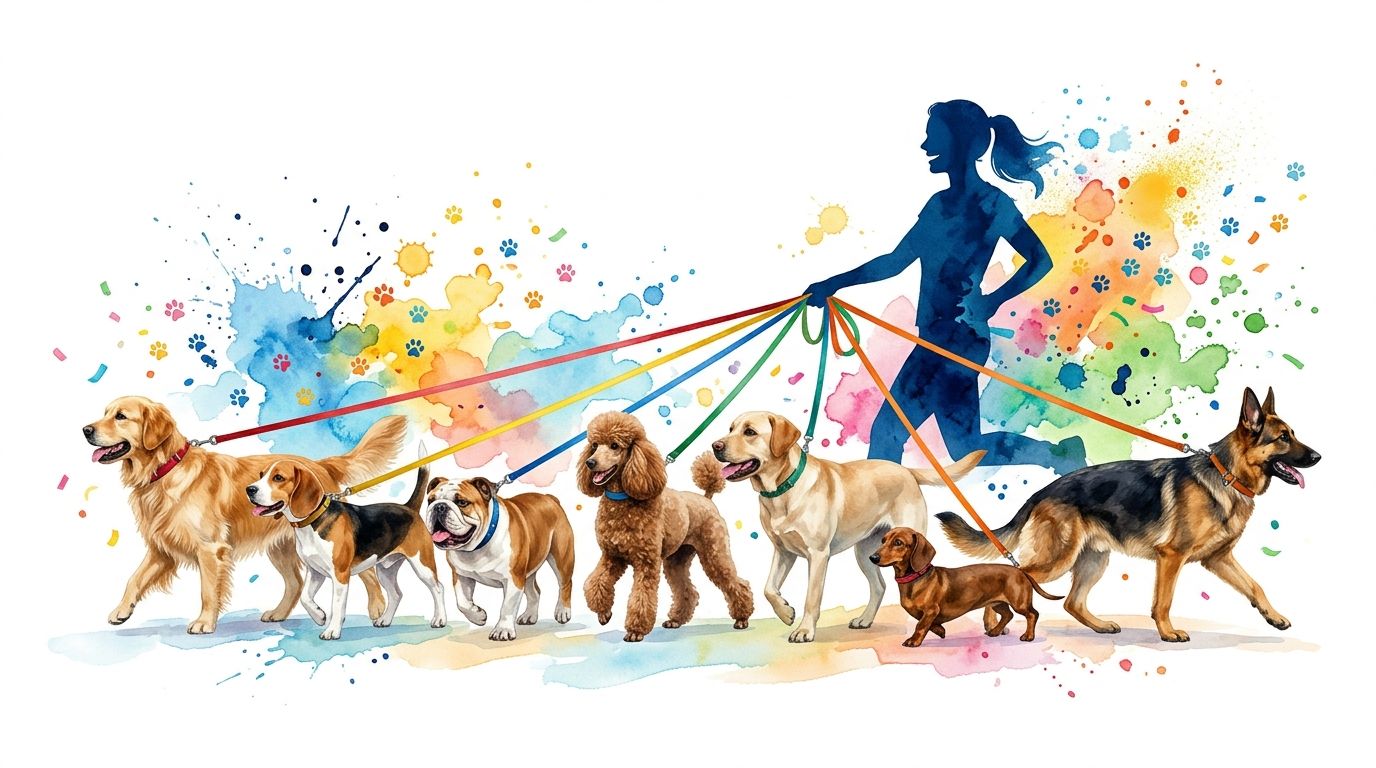
Strong for trust and local search
A place-led name says, “I work here.” That helps with referrals because neighbours often recommend services in shorthand. “Try The Cotswold Walker” is easier to pass on than a vague abstract brand with no local signal.
This style also works nicely when you secure a matching domain early. If you’re new to business websites, it’s worth understanding what a domain name does for your brand and discoverability. A simple local domain can make your business feel established from day one.
The trade-off with local names
The upside is clarity. The downside is expansion. If you later want to cover a wider patch, employ walkers elsewhere, or branch into broader pet care, a tightly local name can become restrictive.
This is also the point at which legal checks matter most. UK naming advice often overlooks it, but you should search Companies House and the UK Intellectual Property Office before settling on a local brand, because many beginners choose names without checking whether a similar registered entity or trademark already exists. A name can be creative and still be unusable.
Local names help people trust you faster. They also create more chances of colliding with an existing local business, so check availability before you print anything.
5. SEO-Friendly & Direct. Your Town Dog Walkers
This is the practical option. Not glamorous, not especially original, but often effective. “Bristol Dog Walkers” or “Clapham Dog Walkers” tells searchers exactly what you are, exactly where you work, and exactly why they should click.
If you’re the kind of owner who cares more about enquiries than brand poetry, this approach deserves a serious look. Direct dog walking business names reduce ambiguity. They don’t need explaining on Google, in a directory listing, or in a text from a friend.
Why direct names can win
Some names ask the website to do all the clarification. This one doesn’t. It carries its own relevance, which can help when paired with good service pages, location copy, and clear metadata.
That doesn’t mean you can ignore design or content. A direct name still needs a site built with SEO-friendly web design principles so that the structure aligns with the search intent you’ve baked into the brand.
What you give up
The cost is distinctiveness. If three competitors use the same formula, your business can blur into the pack unless the rest of your branding is sharper. Logo, colour palette, reviews, page copy, and domain choice all matter more when the name itself is functional.
There’s also a pricing perception issue. In the UK dog-walking market, the average walk costs £11.25, while in London it averages £13.45. A direct location-led name can support that premium better in higher-value urban areas because it immediately ties you to the place clients are already searching for. In less competitive areas, it can feel plain unless your website positions the service well.
A realistic example is “Clapham Dog Walkers”. It may not be elegant, but busy owners searching on their phone at lunch won’t misunderstand it.
6. Luxury & Premium. The Urban Pawcierge
The Urban Pawcierge is a deliberate move upmarket. It signals that you’re not selling a basic block walk. You’re offering a polished, city-focused service with handovers, updates, flexibility, and perhaps add-ons such as feeding, towel-downs, or key management.
The spelling twist works here because the target audience is likely to appreciate the wordplay. In affluent urban postcodes, a premium name can help justify a more customised offer. It can also attract clients who want their pet care provider to feel organised and brand-conscious.
Best fit for city clients
This style works when your whole service matches it. Think apartment blocks, office workers, premium neighbourhoods, and owners who expect clean communication and smooth logistics.
A good example is a weekday service in central London aimed at professionals who leave early, return late, and want photo updates after every walk. The name prepares clients to expect a polished experience.
Premium name, premium expectation
Luxury naming brings pressure. If your online presence looks cheap, the brand falls apart. The cost of a traditional website build can become a real obstacle for a new service business. A professional small business website in the UK commonly costs between £1,600 and £7,200, with average annual maintenance around £960. Many new walkers don’t want that overhead before the first regular bookings are in place.
That gap is exactly why bundled website support is appealing for local service businesses. You need the polished look without vendor juggling or agency delays. Premium clients expect a secure site, too, and SSL and site security are non-negotiable before launch because browsers flag unsecured sites, which undermines trust.
Premium branding doesn’t just raise your prices. It raises what clients expect at every touchpoint.
7. Owner-Focused & Clever. While You’re Out
While You’re Out is smart because it centres the owner’s problem, not the dog. It speaks directly to the feeling behind the purchase: guilt, schedule pressure, worry about long workdays, and the need for dependable help.
That makes it memorable in a different way. Instead of sounding like a traditional dog-walking company, it comes across as a useful service built for modern life. It’s empathetic without being sentimental.
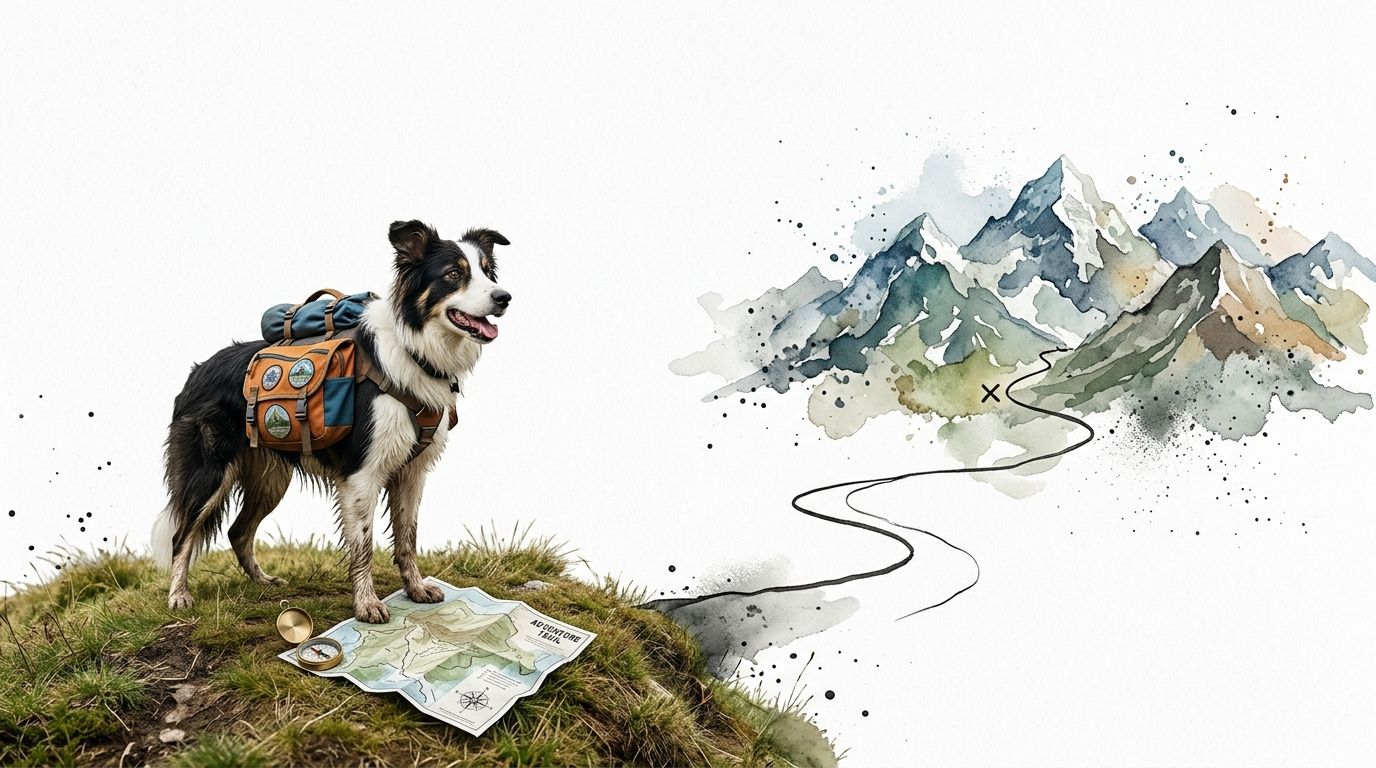
Here’s the kind of adventurous, reassuring tone this style can support:
Why it connects
Names like this help when your marketing focuses on peace of mind. Think midday visits, key holding, short notice cover, and updates sent while the client is at work. It feels less like a dog-only business and more like part of the client’s support system.
A strong example would be a service page titled “Walks and home visits while you’re out at work”—the name and the offer line up naturally.
Where it needs support
This style can be slightly indirect, so your website and directory text should clearly state “dog walking.” Don’t assume the name alone will do all the explaining.
The broader benefit is flexibility. If you may later add cat visits or home pop-ins, this kind of owner-led name stretches well. It also suits fast launch thinking. It takes roughly 13 days on average to formally start a small business in the UK and Ireland, so getting your web presence live quickly after choosing a name can give you a real head start while others are still waiting on long agency timelines.
8. Punny & Memorable. Tail Tales
A good pun can work brilliantly in pet services. Tail Tales is soft, easy to say, and emotionally warm. It suggests every walk has a little story behind it, which makes it especially strong for businesses that share updates, photos, and social content after each outing.
This is one of the most brandable styles on the list. It can sit comfortably on an Instagram handle, a website banner, a welcome card, and even a little “today’s tale” update sent to owners after the walk.
Why this one sticks
The pun isn’t forced. That’s important. Too many pun-based dog walking business names go so hard on the joke that they become hard to spell, hard to say, or hard to trust. Tail Tales stays light and readable.
It also suits content-led marketing. If you post little walking stories, park snapshots, or “what we got up to today” recaps, the name becomes part of the service experience rather than just a label.
Keep the cleverness under control.
The risk with punny names is over-decorating the brand. If the logo, copy, colours, and social captions all become too whimsical, clients may wonder whether the service itself is organised enough. Keep the name playful and the operation crisp.
A realistic use case is a walker who sends short post-walk summaries like, “Today’s Tail Tale: Archie insisted on the longest sniff stop in the park.” That’s charming, memorable, and still professional if the booking process, invoicing, and communication stay clear.
8-Way Comparison of Dog-Walking Business Names
| Name | Implementation (🔄) | Resources (⚡) | Expected Outcomes (📊 ⭐) | Ideal Use Cases (💡) | Key Advantages (⭐) |
|---|---|---|---|---|---|
| Catchy & Modern: Paws & Strides | 🔄 Low, easy to adopt and trademark checks are typical | ⚡ Low, basic logo, social handles, simple website | 📊 Strong brand recall and social traction; ⭐⭐⭐⭐ | 💡 Broad audience, social media-first businesses | ⭐ Memorable, energetic, gender-neutral |
| Playful & Creative: The Pooch Parade | 🔄 Medium, needs tone and visual alignment | ⚡ Medium, branded assets, themed vehicles/merch | 📊 High engagement for community activities; ⭐⭐⭐⭐ | 💡 Group walks, community events, family clients | ⭐ Visual branding potential, fun community feel |
| Professional & Trustworthy: Leash & Lead | 🔄 Medium, precise tone to communicate expertise | ⚡ Medium, professional uniforms, training materials | 📊 Perceived reliability and safety; ⭐⭐⭐⭐ | 💡 Clients with reactive or training-needy dogs | ⭐ Conveys control, competence, training focus |
| UK & Localised Focus: The Cotswold Walker | 🔄 Low, name localisation is straightforward | ⚡ Low, local SEO, location-based marketing | 📊 Strong local discovery and trust; ⭐⭐⭐⭐ | 💡 Hyper-local services, community-focused growth | ⭐ Excellent for local SEO and area credibility |
| SEO-Friendly & Direct: [Your Town] Dog Walkers | 🔄 Low, minimal branding complexity | ⚡ Low, domain, directory listings, local ads | 📊 Fast SEO visibility for local search; ⭐⭐⭐⭐⭐ | 💡 New businesses seeking rapid local leads | ⭐ Direct, unambiguous, high-intent discovery |
| Luxury & Premium: The Urban Pawcierge | 🔄 High, needs premium positioning and service design | ⚡ High, upscale branding, premium staffing, extras | 📊 High revenue per client and brand prestige; ⭐⭐⭐⭐⭐ | 💡 Affluent urban markets, concierge-style services | ⭐ Justifies premium pricing, high-end appeal |
| Owner-Focused & Clever: While You’re Out | 🔄 Medium, messaging must emphasise empathy | ⚡ Medium, customer communication tools, trust signals | 📊 Strong client trust and retention; ⭐⭐⭐⭐ | 💡 Busy professionals seeking reassurance | ⭐ Customer-centric, conversational, reassuring |
| Punny & Memorable: Tail Tales | 🔄 Low, creative name, easy to deploy | ⚡ Medium, content strategy for storytelling | 📊 Great social/content engagement and brand warmth; ⭐⭐⭐⭐ | 💡 Social media storytelling, photo-driven marketing | ⭐ Distinctive, narrative-friendly, highly brandable |
From a Great Name to a Thriving Business
A good test happens on a busy weekday evening. A dog owner searches on their phone, scans a few local options, and decides in seconds who feels credible enough to contact. Your name does a lot of that work before they read a full sentence.
That is why naming and launching should be treated as one job, not two separate projects. The best dog walking business names are easy to say, easy to search, and easy to place on the things that win work fast: a Google Business Profile, a simple website, local directories, van signage, and social profiles.
Run your shortlist through practical checks. Say each name out loud. Send it in a text message. Put it at the top of a mock homepage and on a flyer. If it looks awkward in writing, sounds unclear on the phone, or needs an explanation, drop it. Memorable beats clever if clients cannot recall what to search for later.
The category you choose should shape your next branding step. A modern name, like Paws & Strides, suits a clean website and a simple logo. A local name such as The Cotswold Walker gives you a clear starting point for service-area pages and directory listings. A direct name, such as Your Town Dog Walkers, can help you get found quickly, but it leaves less room for personality, so the site design and reviews need to carry more of the brand.
The legal and admin checks come next.
In the UK, dog walkers operating as sole traders need to register with HMRC for self-assessment. Before printing anything or buying signage, check whether the name clashes with an existing business or trademark. Then claim the domain and secure consistent handles if you can. That small bit of discipline saves messy rebranding later.
Directory visibility matters too. Many dog walkers pick up early enquiries through Dog Walker Directory Forwalks. co. ukuk, and The UK Pet Directory. A name that is clear, local, and easy to spell usually performs better there than one that is too abstract or too niche.
As noted earlier, dog-owning households vary. Your name should be broad enough to fit the single-dog owner, the busy couple, and the family with multiple pets, without sounding generic. That balance is harder than it looks, which is why the strongest names usually feel specific in tone but flexible in use.
Then move quickly.
A strong name sitting in a notebook does not build trust or bring in bookings. For a local service business, the fastest wins usually come from getting a credible website live, connecting a contact form, showing your service area, and making it easy for someone on mobile to enquire in under a minute.
A polished site does not need layers of custom development. It needs clear services, pricing or quote guidance, trust signals, mobile-friendly contact options, and branding that matches the style of the name you chose. That is how a catchy idea becomes a working business asset.
Launch your website in an hour with a domain, SSL, hosting, and maintenance included. 1stNet AI Ltd website team transforms your online presence with a stunning website for dog walkers, local services, and growing UK businesses. Call us now at 0204 577 2255. Don’t miss this chance to boost your brand. All work comes with a 30-day money-back guarantee, and the team offers an interactive live chat system to design your website. If you’ve chosen your name and want to get trading fast, 1stNet AI Ltd gives you one provider for design, launch, hosting, security, and ongoing support.