
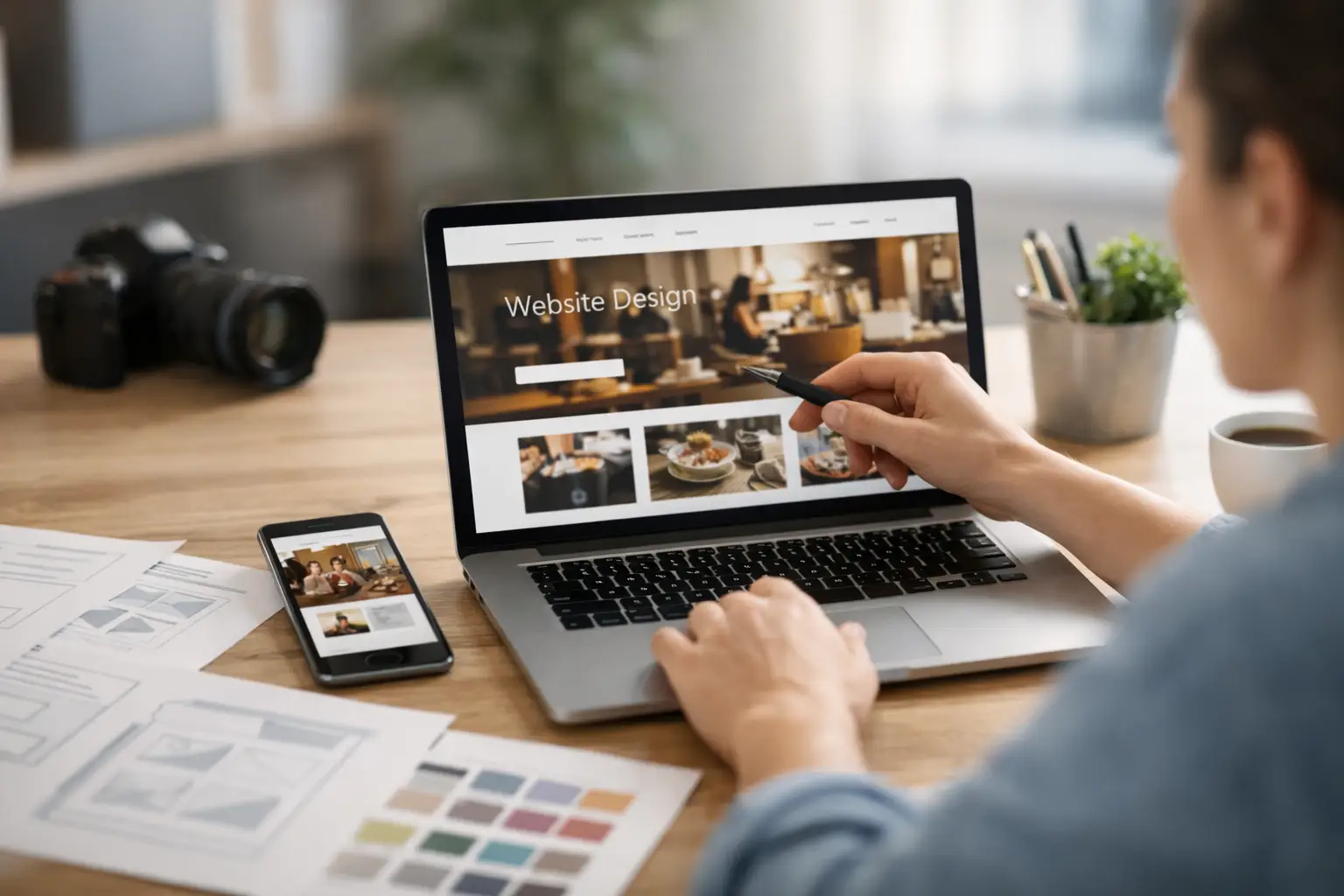
A customer has searched for your service, found your website and is deciding whether to contact you. That decision can happen in seconds. Website design for small businesses is not about adding flashy effects or copying a big brand. It is about making it easy for the right people to understand what you offer, trust your business and take the next step.
For a local tradesperson, that may mean more calls. For a consultant, it may mean booked appointments. For an independent retailer, it may mean online orders. The right website gives your business a professional home that works while you are serving customers, travelling between jobs or focusing on growth.
What Website Design for Small Businesses Must Do
A good small-business website has a clear commercial job. It should answer the questions visitors are already asking: What do you do? Who do you help? Where do you operate? Why should they choose you? How can they get in touch?
If those answers are difficult to find, visitors will not spend time hunting for them. They will return to the search results and choose a competitor whose website feels clearer and more credible.
Your homepage should quickly state your main service, the location or audience you serve, and the outcome customers can expect. A Bristol-based accountant, for example, should not lead with a vague slogan. They should make it clear that they provide accountancy support for local sole traders, contractors or limited companies. Plain English converts better than clever wording when someone needs help now.
The design also needs to guide visitors towards an action. That could be calling, requesting a quote, booking a consultation, sending a WhatsApp message or purchasing a product. One strong call to action, repeated naturally across the page, is usually more effective than presenting five competing choices.
Start With the Customer Journey, Not the Colour Palette
Colours, fonts and images matter because they shape first impressions. But they should support the customer journey rather than lead it. Before choosing a style, decide what a visitor needs to see in order to become an enquiry or sale.
For most small businesses, the journey is straightforward. Someone lands on the site from a search, social post, recommendation or local listing. They need immediate reassurance that they are in the right place. Then they want enough detail to feel confident about contacting you.
That means your core pages should be purposeful. A service page needs to explain the problem it solves, what is included and how to get started. An about page should show the people, experience and values behind the business without becoming a long autobiography. A contact page should remove friction with visible phone, email and enquiry options.
A portfolio, case study or reviews section can make a major difference where trust is a deciding factor. Customers do not simply want promises. They want evidence that you understand the work and have delivered good results for people like them.
Mobile Design Is Not an Extra
Many local and service-based searches happen on a phone, often when the customer is ready to act. If your website is hard to read, buttons are too small or a contact form is frustrating on mobile, you can lose an otherwise qualified lead.
Responsive design adapts the layout to different screen sizes, but there is more to it than shrinking a desktop page. Mobile visitors need clear headings, quick-loading images, easy-to-tap buttons and contact details that are always simple to find. Long paragraphs, crowded menus and pop-ups that cover the screen can work against you.
There is a trade-off here. A visually ambitious site with large video files, motion effects and high-resolution imagery can look impressive, but it may load slowly on a mobile connection. For a small business, speed and clarity usually deliver more value than decoration. Keep the elements that help customers decide, and remove the ones that merely delay them.
Build Trust Before You Ask for the Enquiry
A website cannot replace good service, but it can show visitors that your business is legitimate, prepared and easy to work with. Trust is created by details that are often overlooked: a professional domain name, secure HTTPS browsing, accurate contact information, recent testimonials and clear explanations of your services.
Pricing is another judgement call. Some businesses benefit from displaying prices or starting-from figures because it filters unsuitable enquiries and builds confidence. Others need to quote after understanding the job. If you cannot show a fixed price, explain your process and set expectations around response times, consultations or estimates.
Avoid stock-heavy pages that could belong to any business. Real project photos, team images and local references are often more persuasive, provided they are clear and professionally presented. You do not need a large marketing department to look credible. You need an honest website that reflects the standard of work customers can expect.
Make Search Visibility Part of the Build
A beautiful website that cannot be found will struggle to support growth. Search visibility should be considered during design and build, not added as an afterthought months later.
Each key page needs a clear purpose and language that matches how customers search. A locksmith in Leeds, for instance, should have useful pages around the services and areas they genuinely cover, rather than one generic page trying to appeal to everyone. This gives search engines clearer context and gives visitors more relevant information.
On-page optimisation includes page titles, headings, descriptive copy, image information and a sensible page structure. Technical foundations matter too: secure hosting, fast performance, mobile responsiveness and clean indexing all support a site that can be properly understood by search engines.
AI search visibility deserves attention as customer behaviour changes. People increasingly ask detailed questions through AI-powered search tools rather than typing two or three keywords. Helpful pages that clearly explain services, locations, expertise and common customer concerns are better placed to be cited or surfaced. The answer is not to fill pages with jargon. It is to publish specific, useful information in language your customers recognise.
Keep the Essential Pages Focused
A small business rarely needs dozens of pages at launch. A lean website with well-written core pages is more valuable than a sprawling site full of thin, outdated content.
The essentials will vary by business, but most sites benefit from:
- a homepage that introduces your offer and leads visitors towards contact or purchase;
- service or product pages that explain what customers receive;
- an about or trust page featuring experience, reviews, accreditations or examples of work;
- a contact page with clear ways to reach you; and
- a privacy page and any relevant terms, particularly if you collect customer information or sell online.
An e-commerce business will also need clear delivery, returns and payment information. A professional service may need an FAQs page to handle common questions before a consultation. The point is not to add pages for the sake of it. Every page should help a customer make a decision or help your business be found for a relevant search.
Do Not Leave Maintenance Until Something Breaks
Launching a website is the beginning of its working life, not the end of the project. Software updates, security checks, backups, content amendments and hosting support all need ongoing attention. Neglect is one of the most expensive ways to manage a website because problems are often noticed only after a site becomes slow, insecure or unavailable.
This is where an all-done-for-you service can save a business owner serious time. Instead of coordinating a designer, developer, domain provider, hosting company and SEO specialist, you have one accountable team handling the technical details. 1stNet AI provides that kind of managed approach, combining design, hosting, security, ongoing support and search-focused optimisation in one service.
Monthly support also makes it easier to keep your website accurate. New services, seasonal offers, team changes and customer questions can be reflected quickly rather than waiting until the next major redesign. A website that stays current gives customers more confidence than one showing old offers and stale information.
A Faster Route From Idea to Launch
Small businesses often delay a new site because traditional web projects feel slow, expensive and full of technical decisions. The practical alternative is a guided process with clear ownership.
First, define the outcome. Decide whether your priority is calls, quote requests, online sales, bookings or credibility for referrals. Next, gather the essentials: your logo if you have one, business details, services, coverage areas, photos, testimonials and any existing brand materials. Finally, review the design around the questions your customers ask most, then launch with hosting, security and support already in place.
You do not need to become an expert in domains, SSL certificates, page speed or search optimisation to have a website that performs. You need a clear brief, a business-focused design and a provider that explains what is happening without hiding behind technical language.
Your website should make growth feel easier, not create another job on your to-do list. Get the foundations right, keep the message clear and give customers a simple reason to contact you with confidence.