

You’re probably in one of two situations right now. Either you need your first proper website, or you’re drowning in terms like hosting, SSL, domains, maintenance, and SEO. Or you’ve already tried the piecemeal route, and you’re tired of chasing different suppliers every time something breaks.
Most UK small business owners don’t need more jargon. You need a website that looks credible, loads properly, stays secure, and gives customers a clear reason to contact you or buy from you. That’s the purpose of website design and hosting. It’s not a technical project for its own sake. It’s part of your sales system.
The mistake I see most often is treating design, hosting, security, and SEO as separate purchases. They aren’t. They affect each other from day one. If you want a practical starting point, look at how web design and development services for small businesses are bundled and delivered, then compare that model against the fragmented approach most business owners get pushed into.
Table of Contents
- Getting Your UK Business Online Without the Headache
- Understanding Website Design and Hosting: The House Analogy
- The All-in-One Advantage for UK Startups
- Choosing Your Hosting and Ensuring Security
- From Idea to Live Site Fast and On Budget
- Planning for Long-Term Success With Maintenance and SEO
- Your Website Decision Checklist for UK Businesses
Getting Your UK Business Online Without the Headache
Starting a business is already enough to think about. Pricing, customers, cash flow, suppliers, insurance, and admin. Your website shouldn’t become the bit that stalls everything.
The problem is simple. The web industry loves splitting a single business need into multiple technical purchases. First, someone tells you to buy a domain. Then you need hosting. Then design. Then someone mentions SSL. Then someone else starts talking about plugins, performance, backups, indexing, and mobile optimisation. It sounds bigger than it is.
Your website is just your business front door online. It needs to do four jobs well:
- Build trust fast: If the site looks dated or confusing, customers assume the business hasn’t changed.
- Explain what you do: Visitors should understand your offer without having to hunt for it.
- Make contact easy: Calls, forms, bookings, or purchases should be obvious.
- Keep working reliably: You shouldn’t be dealing with technical issues every week.
That’s why I advise small business owners to make decisions in business terms, not tech terms. Ask what helps you launch, what keeps costs predictable, and what removes admin from your plate.
Practical rule: If a website decision makes your business harder to run, it’s the wrong decision, even if it sounds clever.
You also don’t need to buy enterprise-grade complexity. A local service business, consultant, trades business, clinic, retailer, or startup usually needs a clean structure, mobile-friendly pages, dependable hosting, and ongoing support. That’s the core. Everything else should support that, not distract from it.
A good website is achievable. A manageable setup is achievable, too. You don’t need to become your own part-time IT department to get there.
Understanding Website Design and Hosting: The House Analogy
Most confusion disappears once you separate website design from website hosting.
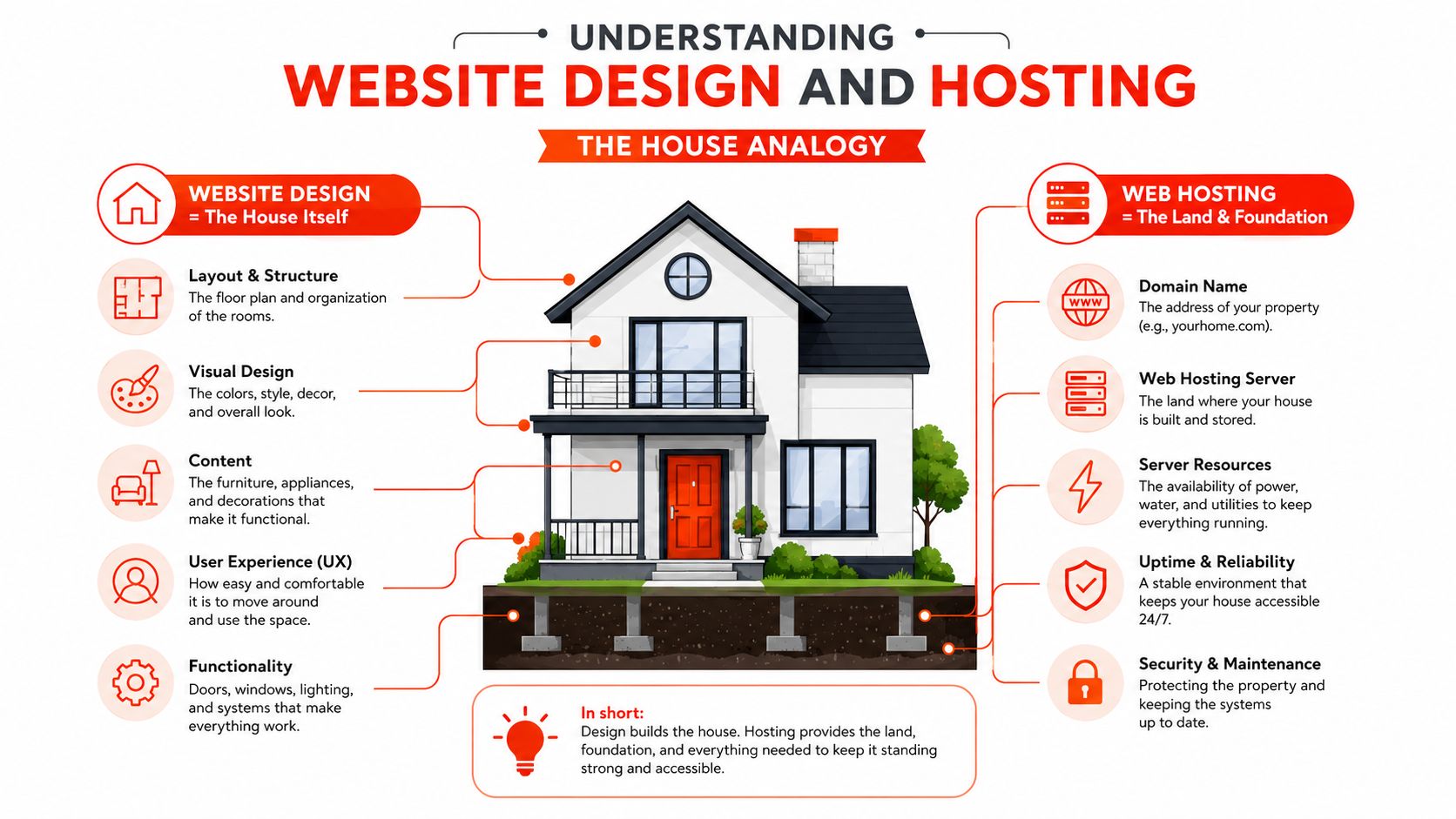
Think of your website like a business premises.
Website design is the part that customers experience
Design is the building itself. It’s the layout, the signage, the entrance, the lighting, the way customers move through it, and how easy it is to find the till.
On a website, that means your branding, colours, typography, imagery, page structure, navigation, calls to action, and mobile layout. It also includes user experience. Can people find your services quickly? Can they understand what you offer? Can they contact you without friction?
That matters far more than many owners realise. Web design influences 94% of a potential customer’s first impression, visitors form an opinion in 0.05 seconds, and 38% of visitors leave immediately due to poor aesthetics, according to Hostinger’s web design statistics roundup.
A quick visual explanation helps here:
If your site looks messy, outdated, or difficult to use, customers won’t stop to be generous. They leave.
Hosting is the foundation that keeps everything available
Hosting is the land, utilities, and ongoing building access. It’s what makes the website live on the internet so people can visit it. Without hosting, the design exists, but nobody can reach it.
Here’s the simplest way to understand it:
| Part | What it means for your business |
|---|---|
| Domain | Your web address, the sign outside the premises |
| Hosting | The infrastructure that keeps the site online |
| SSL certificate | The security lock on the front door |
| Maintenance | The repairs and checks that stop problems from building up |
A lot of business owners spend all their attention on appearance and almost none on the infrastructure underneath. That’s backwards. A polished design on weak hosting is like fitting a lovely shop interior inside a damp, unreliable building.
Your customer never says, “This server setup seems poor.” They say, “This business looks unreliable,” then they leave.
Good website design and hosting work together. Design earns trust. Hosting protects the experience. If either side is weak, the whole site underperforms.
The All-in-One Advantage for UK Startups
You launch your site with one freelancer, one host, one domain company, and one person handling fixes as needed. Then the contact form stops working, the site goes offline for an hour, or your SSL renewal gets missed. Suddenly, you are not buying a website. You are managing a chain of suppliers, and none of them owns the full result.
For most UK startups, that is a poor deal.
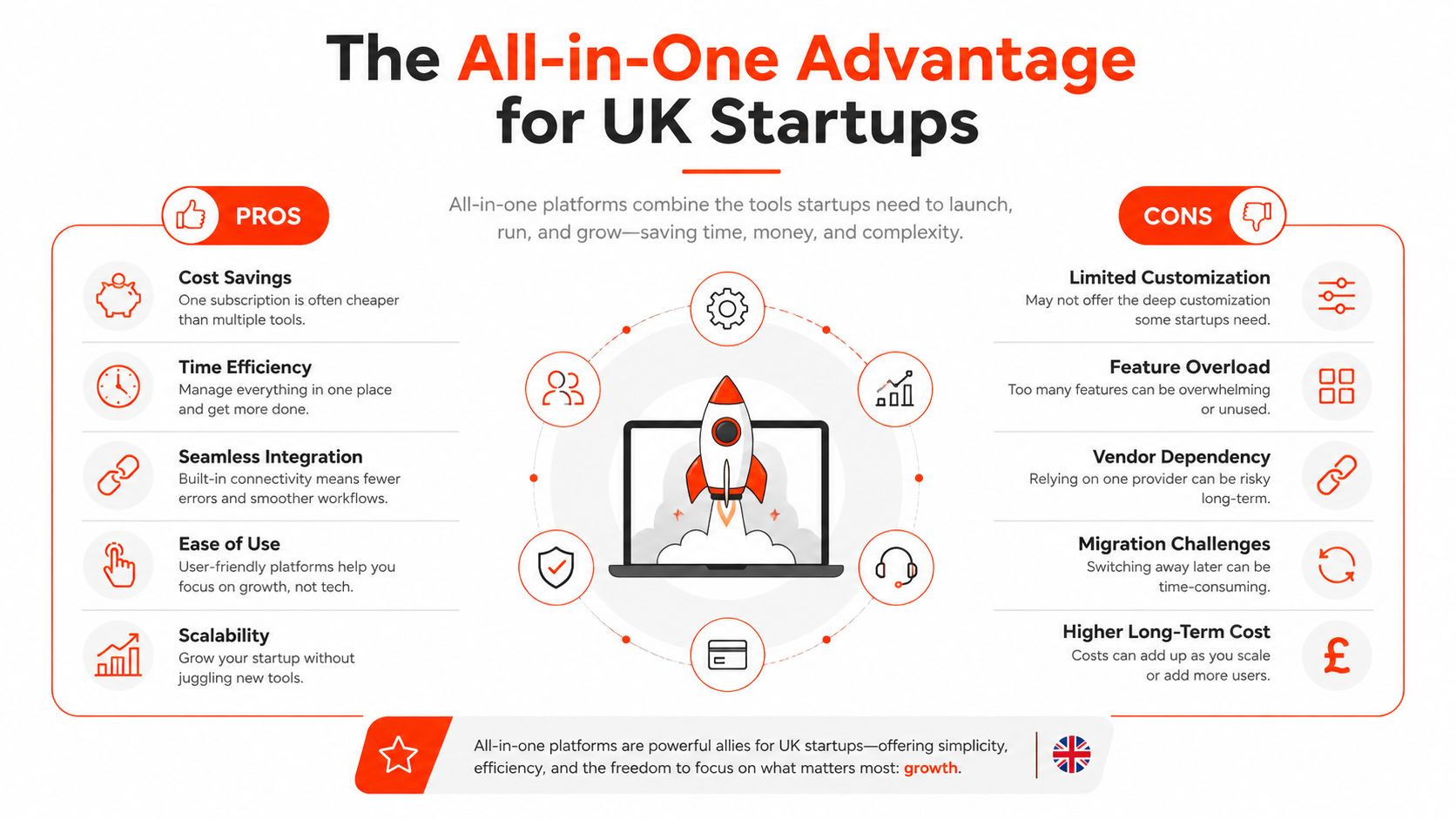
A fragmented setup looks flexible on paper. In practice, it creates more admin, slower fixes, and more risk at the exact stage where your business needs focus and momentum. If your website is there to win enquiries, build trust, and support sales, splitting design, hosting, security, and SEO across separate suppliers usually works against you.
Fragmented buying creates avoidable failure points.
The biggest problem is not technical. It is accountability.
If your site is slow, your designer may blame the hosting company. If a plugin update breaks the layout, the host may say the build is the issue. If backups have not been checked, everyone assumes someone else handled them. You are left chasing answers while customers see a broken or unreliable site.
The usual problems are predictable:
- Blame shifting: Problems take longer to diagnose and longer to fix.
- Scattered access: Logins, billing, renewals, and support requests end up spread across too many systems.
- Missed routine work: Updates, backups, and security checks slip because they are nobody’s clear job.
- Budget creep: Low entry prices add up to a stack of monthly costs across several providers.
Platform-locked website builders add another risk. They are quick to start with, but they can become expensive and awkward to leave. A UK-focused review of website platform lock-in risks at iamcurious. co. The UK makes that point clearly. Convenience at the start can limit your options later.
One provider means one line of responsibility.
A good all-in-one service is not the same as being trapped in a closed platform. You want one supplier to manage the build, hosting, domain, SSL, maintenance, and support, while your ownership, access, and future options remain clear.
That model works well for startups because it reduces wasted time. Your design can be built around the hosting setup. Security can be configured properly from day one. Updates, backups, and support sit under one roof instead of being passed around. If something breaks, you know exactly who to call.
A practical example is a provider offering a bundled website, domain, SSL, and hosting service, where the core parts of the site are managed together rather than split across separate vendors. That approach suits many small businesses because it ties design decisions to performance, security, and day-to-day upkeep. It is a business decision as much as a technical one.
Use this comparison when you assess your options:
| Model | What you gain | What you risk |
|---|---|---|
| DIY fragmented setup | Freedom to pick each supplier | More admin, more gaps, slower problem resolution |
| Bundled managed service | Clear responsibility, less overhead, tighter coordination | Less appeal if you want to manage every detail yourself |
| Platform-locked builder | Fast setup and simple editing | Higher switching costs, less flexibility, and pricing pressure later |
If your priority is growing your business rather than coordinating web suppliers, choose the model that gives you one accountable partner. For most UK startups, that is the stronger option.
Choosing Your Hosting and Ensuring Security
A slow, unreliable site costs you twice. You lose enquiries in the moment, and you look less credible to the next visitor who lands on your homepage.
Choose hosting based on what your website does for the business. If you run a brochure site for a local service company, shared hosting can be perfectly adequate, provided it is well managed and not packed with neglected sites that drag performance down. If you sell online, rely on bookings, or expect regular campaign traffic, pay for a managed VPS or a similar setup that delivers more consistent speed, tighter control, and less risk during busy periods.
Location matters as well. If your customers are in the UK, host your site close to them. A UK data centre usually delivers faster initial load times and a better overall experience, especially on mobile. That supports two things small businesses care about: trust and conversions.
Do not buy hosting by reading feature lists. Buy it by asking what happens on a normal Tuesday, and what happens when something goes wrong on a busy Friday.
What good hosting should include
You need a service addressing the basics properly, not a cheap plan padded with technical jargon. Check for these points before you sign anything:
- SSL included: Your site should load securely over HTTPS from day one.
- Automatic backups: Daily backups are better than occasional manual ones.
- Update management: WordPress core, plugins, themes, and server software need to be patched.
- Security monitoring: Someone should be watching for malware, failed logins, and downtime.
- Clear support: You need a real route to help, not a maze of tickets and blame-shifting.
Fragmented buying starts to hurt when your hosting sits with one company, your SSL with another, and your maintenance with a freelancer. Small faults turn into long email chains. No one owns the outcome. Your business carries the risk.
An all-in-one setup is usually the safer option for a small UK business because hosting, security, and site management interact every day. A provider offering domain registration, SSL, and hosting as one managed service gives you clearer accountability and fewer gaps between launch and day-to-day upkeep.
Ask one blunt question before you buy. “What will I pay after launch to keep this secure, updated, and online?”
If the answer is vague, the future bill will not be.
From Idea to Live Site Fast and On Budget
A lot of business owners still assume a professional site means a slow agency process and a painful invoice. That can happen. It doesn’t have to.
What websites actually cost in the UK
The UK market already gives you a realistic benchmark. According to IBISWorld’s UK web design services industry data, estimated professional web design packages for UK small businesses typically range like this:
| Website type | Typical UK cost range |
|---|---|
| Basic informational site | £500 to £2,000 |
| Small business site with more functionality | £1,000 to £5,000 |
| E-commerce website | £3,000 to £15,000 |
That’s useful because it stops two bad decisions. The first is buying the absolutely cheapest option and ending up with a site that damages trust. The second is overbuying because a supplier wraps basic work in impressive language.
The same IBISWorld industry profile also notes that the UK Web Design Services industry is projected to generate £658.2 million in revenue in 2026, with revenue expected to contract at a compound annual growth rate of 0.6% through 2025-26, while the number of businesses in the sector reached 2,206 licensed companies between 2020 and 2025. That tells you the market is crowded. You’ve got a choice, but not every offer represents equal value.
Why bundled pricing changes the decision
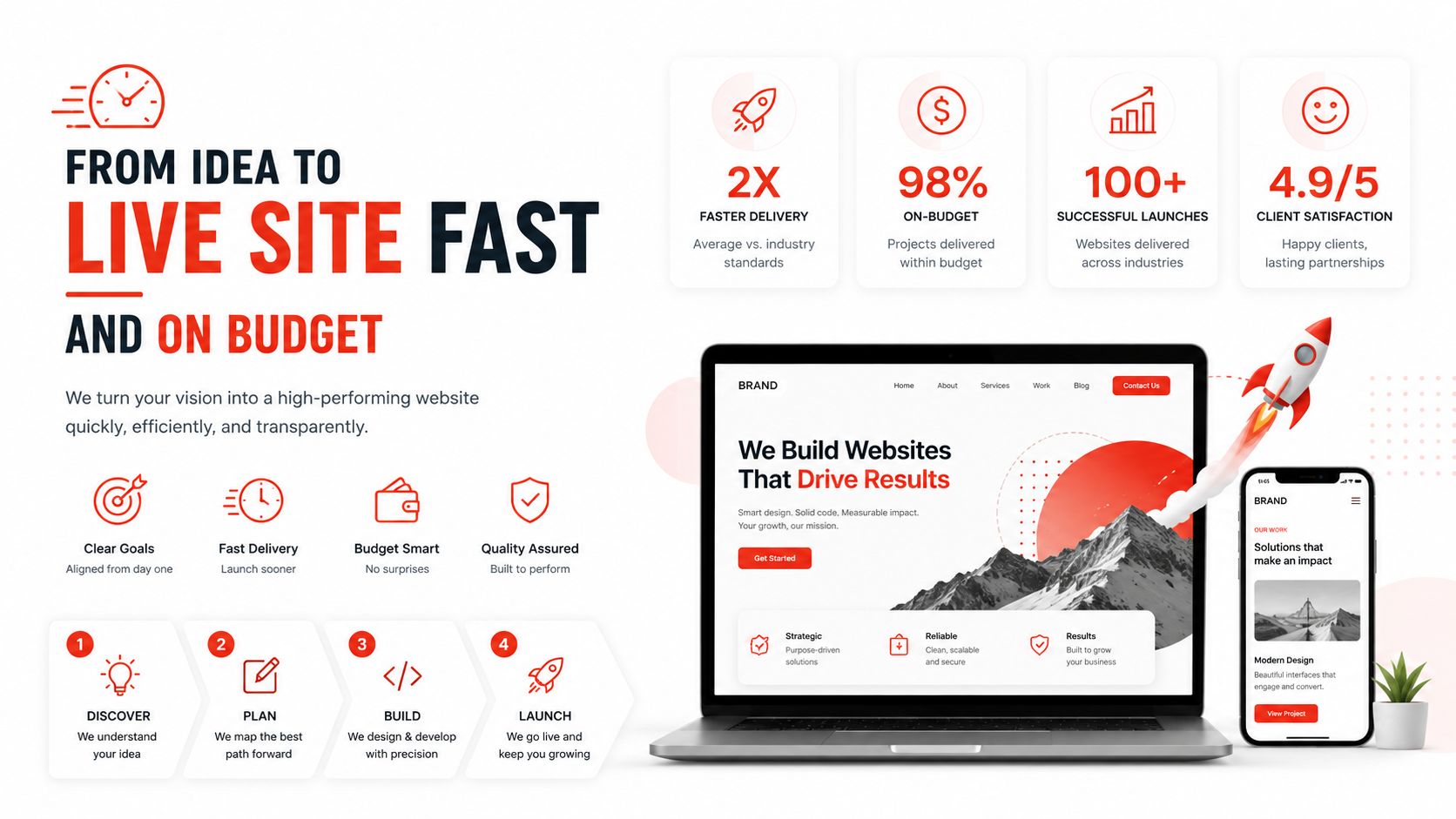
The old model had a high upfront cost. The newer model for small businesses is often monthly or annual service pricing that bundles design, hosting, support, SSL, and maintenance.
That matters because it shifts the budgeting conversation from capital to operating expenses. For a startup or SME, predictable monthly spend is usually easier to manage than a large one-off build followed by random add-ons.
A fast-launch approach also suits businesses that need to start trading quickly. Some providers, including small business website packages built for rapid launch, offer short turnaround models for suitable scopes rather than dragging straightforward brochure sites through a long agency process.
Use this budgeting lens:
- If you need a simple presence site, keep the build lean and spend on clarity, mobile layout, and conversion basics.
- If you need leads regularly, pay attention to page structure, calls to action, and ongoing updates.
- If you need e-commerce, budget for complexity from the start because product setup, payments, policies, and maintenance add work.
Cheap launch prices are easy to advertise. Ongoing clarity is harder to find, and more valuable.
If the quote doesn’t tell you what happens after the site goes live, it isn’t a complete quote.
Planning for Long-Term Success With Maintenance and SEO
Launch day isn’t the finish line. It’s the point where your website either starts helping the business consistently or starts decaying because nobody maintains it.
Maintenance protects the asset you paid for
A business website isn’t a brochure you print once and forget. Software changes. Browsers change. Security threats change. Your own business changes, too.
Without maintenance, several things happen fast. Contact forms fail. Plugins go out of date. Pages get slower. Security risk increases. The site still exists, but it no longer performs like a proper business tool.
That’s why bundled website design and hosting often makes more sense than separating build from care. If one provider owns the maintenance process, updates are less likely to fall through the cracks, and you won’t need to chase multiple people when something breaks.
A sensible maintenance arrangement should cover:
- Software updates: Core systems, themes, and add-ons kept up to date.
- Security checks: Problems identified before they become business interruptions.
- Content edits: Basic updates handled without drama.
- Performance oversight: The site stays usable, not just technically online.
SEO starts with ownership and technical freedom
SEO is often treated as something you bolt on later. That’s a mistake. The groundwork starts with the build itself. A clear structure, mobile-friendly design, sensible page hierarchy, and a clean technical setup all affect how easily search engines understand your site.
Ownership matters too. If you build on a restrictive platform, you may get speed at the start but lose flexibility later. That hurts when you want to expand, redesign, change provider, or improve technical SEO.
The lock-in risk is not theoretical. Data cited earlier showed that 63% of UK SMEs on third-party platform-locked sites faced cost hikes of 200-500% within 18 months. The bigger issue behind that figure isn’t only price. It’s a loss of control over your own digital asset.
If SEO matters to your business, ask whether you can control your pages, metadata, redirects, content structure, and migration path. If the answer is vague, you’re not buying growth. You’re renting convenience.
For businesses that want search visibility built into the delivery rather than treated as an afterthought, compare options against managed SEO optimisation services for business websites. The point isn’t to buy every SEO extra going. It’s to make sure your website can grow without needing a rebuild to fix early shortcuts.
Your Website Decision Checklist for UK Businesses
You don’t need to become an expert buyer. You need a shortlist and the right questions.
Questions to ask before you sign anything
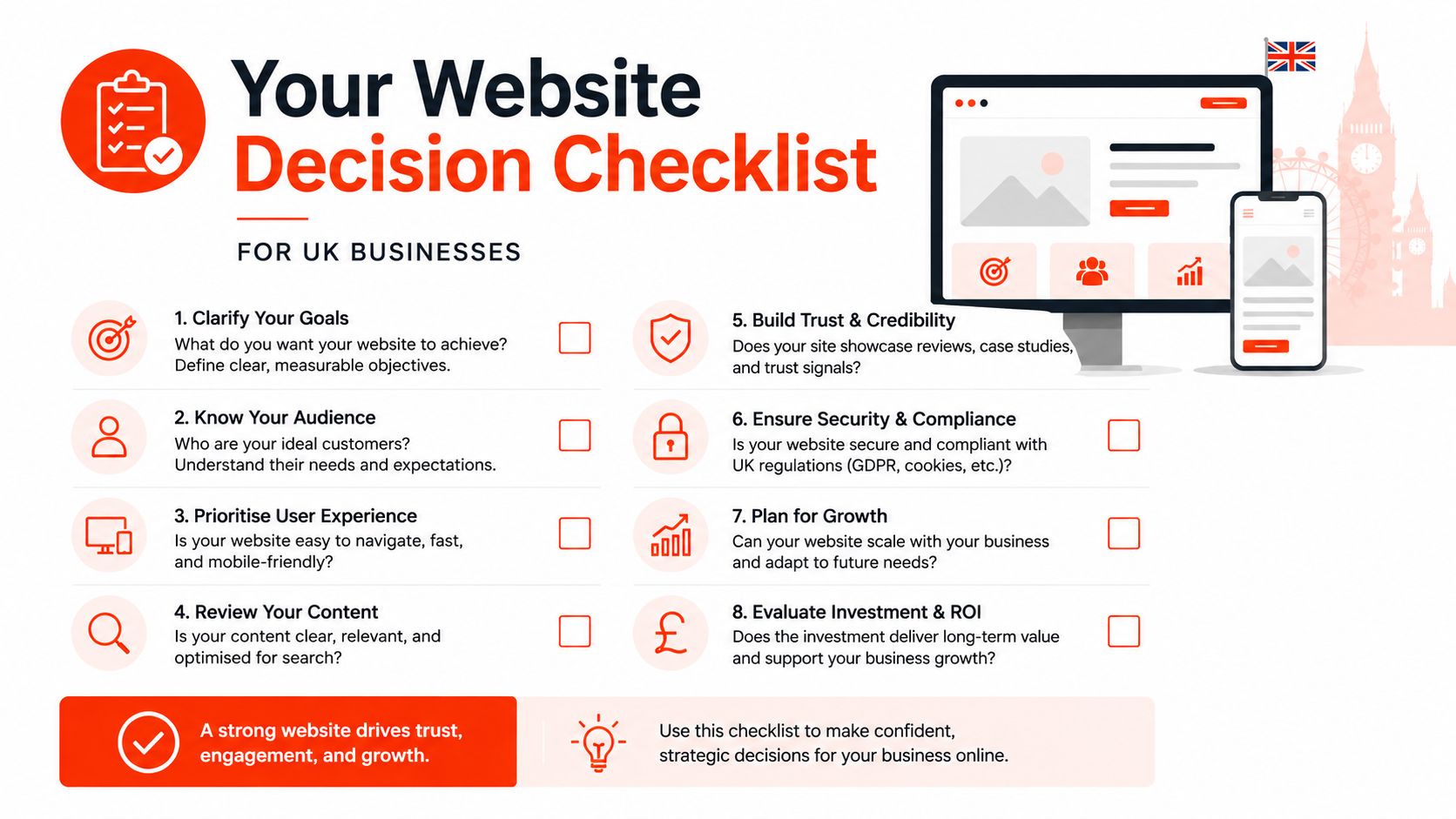
Use this checklist when comparing providers:
Are you set up for UK businesses?
Ask whether pricing is in GBP, whether support operates in your time zone, and whether the service is built around UK small business needs.
What exactly is included?
You want a straight answer on design, hosting, domain, SSL, maintenance, and support.
Who handles updates after launch?
If the answer is “you can do that yourself”, make sure you want that responsibility.
What happens if something breaks?
Ask who fixes it, how support works, and whether you can speak to a real person.
Can my site grow without a rebuild?
Check how future pages, SEO work, content updates, or e-commerce expansion will be handled.
Do I retain control of my domain and content?
If ownership sounds fuzzy, stop there.
Don’t accept glossy generalities. Ask for direct answers in plain English.
“A good provider makes the commercial terms and the technical setup easy to understand. If they make simple questions feel awkward, support will probably feel worse after you’ve paid.”
The shortlist test
If you’re down to two or three options, score them against practical business criteria instead of features for their own sake.
| Decision area | What good looks like |
|---|---|
| Clarity | Clear pricing, clear deliverables, clear support route |
| Accountability | One team is responsible for launch and ongoing care |
| Performance | Hosting suited to UK visitors and a fast-loading setup |
| Security | SSL, updates, backups, and maintenance covered |
| Flexibility | You can expand, optimise, and move if needed |
| Support | You can get help without chasing five suppliers |
The right choice usually isn’t the cheapest quote or the flashiest sales pitch. It’s the option that removes friction from your business and keeps the website useful over time.
If a provider can’t explain how design, hosting, security, and SEO work together, they’re selling pieces, not a solution.
If you want a practical benchmark while comparing suppliers, 1stNet AI Ltd is a UK-based option that bundles website design, hosting, domain setup, SSL, maintenance, and search optimisation for small businesses, with support available by phone, chat, and email. Use that all-in-one model as a reference point when weighing up whether a fragmented setup is really worth the extra admin.