You’re paying for clicks. Google Ads, Facebook, LinkedIn, and maybe a local directory sponsorship too. Traffic arrives, people look around for a few seconds, then leave. No enquiry. No booking. No sale. The problem often isn’t the ad. It’s where the click lands.
A generic homepage tries to do too much at once. It talks to existing customers, job applicants, suppliers, and new prospects in the same space. It has multiple menu options, several competing messages, and too many exits. For campaign traffic, that usually means wasted budget and weak intent capture. Since customers decide in seconds, the page must make the next step obvious immediately.
A dedicated landing page does the opposite. It gives one audience one offer and one action. If you’re promoting a free consultation, the whole page supports that. If you’re selling a specific service, the page removes everything that doesn’t help the visitor understand, trust, and act. That focus is why landing page design services matter. You’re not just buying a page. You’re buying a better chance of turning paid traffic into measurable business.
A small business owner launches a campaign for a seasonal offer. The ad is decent. The audience targeting is sensible. The budget is tight, so every click matters. But the ad sends visitors to the homepage, where they’re asked to choose between five services, read a long company story, and hunt for the contact button.
That setup fails for a simple reason. Campaign traffic needs a straight path.
A landing page is built for one conversion goal. It might be a quote request, a booked call, a brochure download, or a purchase. Everything else gets stripped back. The message lines up with the ad. The offer is clear. The next step feels easy.
A homepage helps people explore. A landing page helps people decide.
That distinction matters more than most businesses realise. When someone clicks an ad, they’ve already shown intent. If the page forces them to figure out what to do next, the business pays for the interest but doesn’t collect the lead.
The practical value of landing page design services is that they bring discipline to that moment. A good provider doesn’t just make a page look polished. They shape the message, reduce friction, connect the form to the right systems, and make the page fit the campaign behind it.
For UK small businesses, that can mean the difference between “our ads don’t work” and “we’re getting qualified enquiries”. The page between the click and the conversion decides which of those outcomes you get.
What Is Included in Landing Page Design Services
Landing page design services are often described too loosely. Some providers mean a quick template swap with your logo and text. Others mean strategy, copy, design, build, integrations, testing setup, and post-launch support. Those are very different purchases.
The best way to think about it is this. A homepage is like a department store. A landing page is a pop-up shop for one event, one audience, and one product line. It doesn’t need to offer everything. It needs to sell one thing well.
Strategy before design
Good landing page design services start before anyone opens Figma, WordPress, Webflow, or another build tool. The first job is to answer a few commercial questions.
Who is this page for: A cold ad click from someone who has never heard of your business needs different messaging from a returning email subscriber.
Which action matters most: quote request, booked consultation, free trial, purchase, or callback request?
What objection is most likely: Price, trust, timing, complexity, or “I’m not sure this is for me”?
What traffic source is feeding the page: Google Ads, Meta ads, email campaigns, or organic traffic? Each brings a different intent.
Without those answers, the design may look clean but still underperform.
What a complete service should include
A proper scope usually includes several moving parts working together:
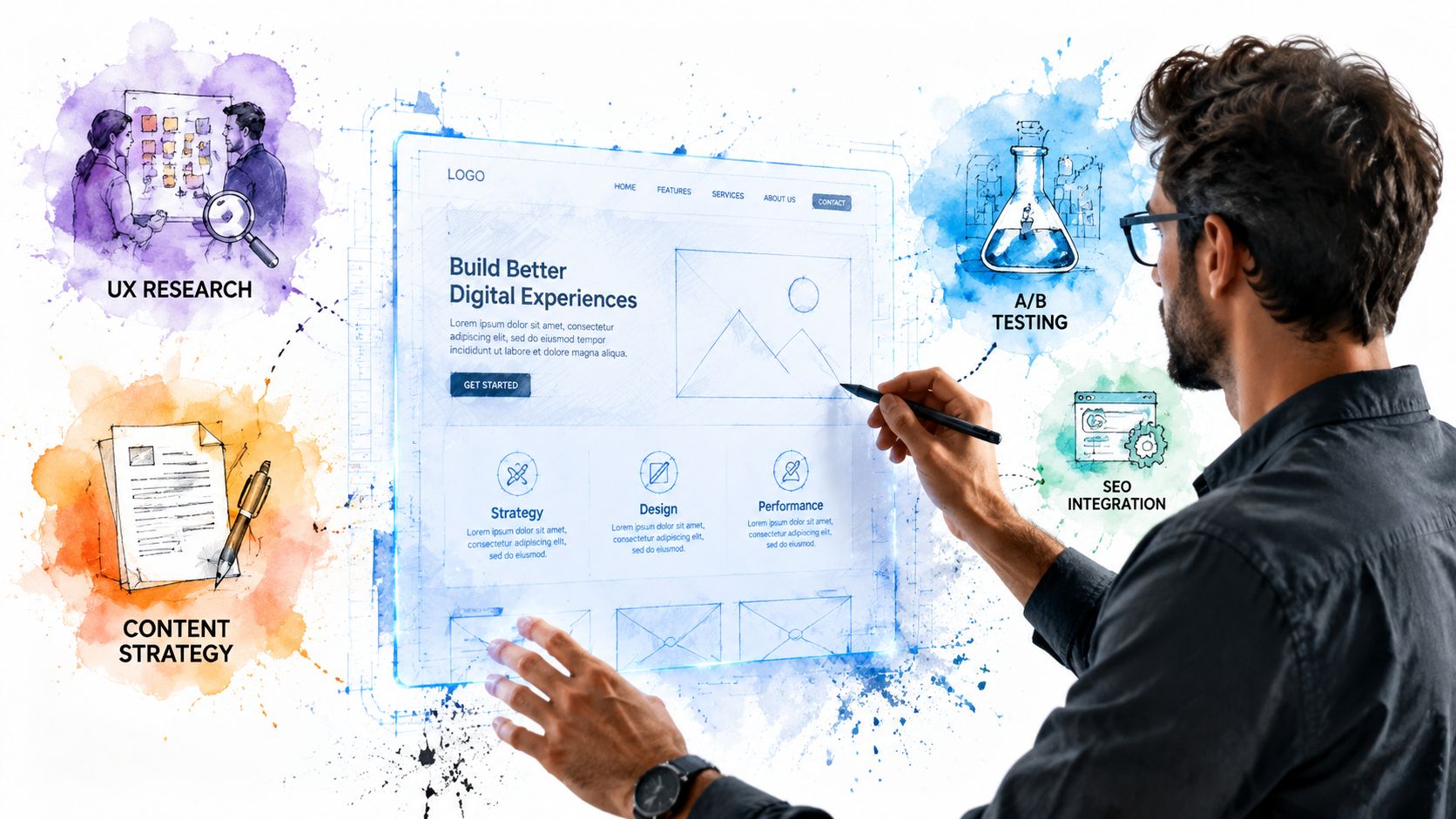
Audience and offer positioning: The provider helps sharpen the value proposition so the page speaks to one need, not ten.
Copywriting: Headlines, subheadings, CTA text, and form prompts should guide action. Strong copy often matters more than decoration.
UX and visual design: Layout, spacing, hierarchy, button placement, and mobile responsiveness all affect whether a visitor keeps reading.
Development: The page must work. That includes fast loading, working forms, tracking scripts, thank-you pages, and mobile behaviour.
Integrations: Forms often need to connect with tools like HubSpot, Mailchimp, ActiveCampaign, or a CRM to prevent leads from getting lost.
Testing setup: The page should be ready for variation testing, even if live experiments happen later.
Practical rule: If a provider talks only about colours, fonts, and animations, you’re buying surface work, not conversion work.
Some businesses only need a single-page build for one campaign. Others need a repeatable landing page system with reusable sections, connected analytics, and internal reporting. The right service depends on the sales process behind it, not just on how the page looks.
The Anatomy of a High-Converting Landing Page
A landing page can look modern and still fail. What matters is whether each part reduces doubt and moves the visitor one step closer to action. That’s why structure beats style.
The performance gap is wide. In 2026, the median conversion rate for a dedicated landing page is 4.02%, while top-performing pages exceed 11.45%, according to Digital Applied’s 2026 landing page conversion data. The same source notes that a 1-second load delay can cut conversions by 7%, and that increasing the number of page elements from 400 to 6,000 can cause a 95% drop in conversion probability.
What visitors need to see first
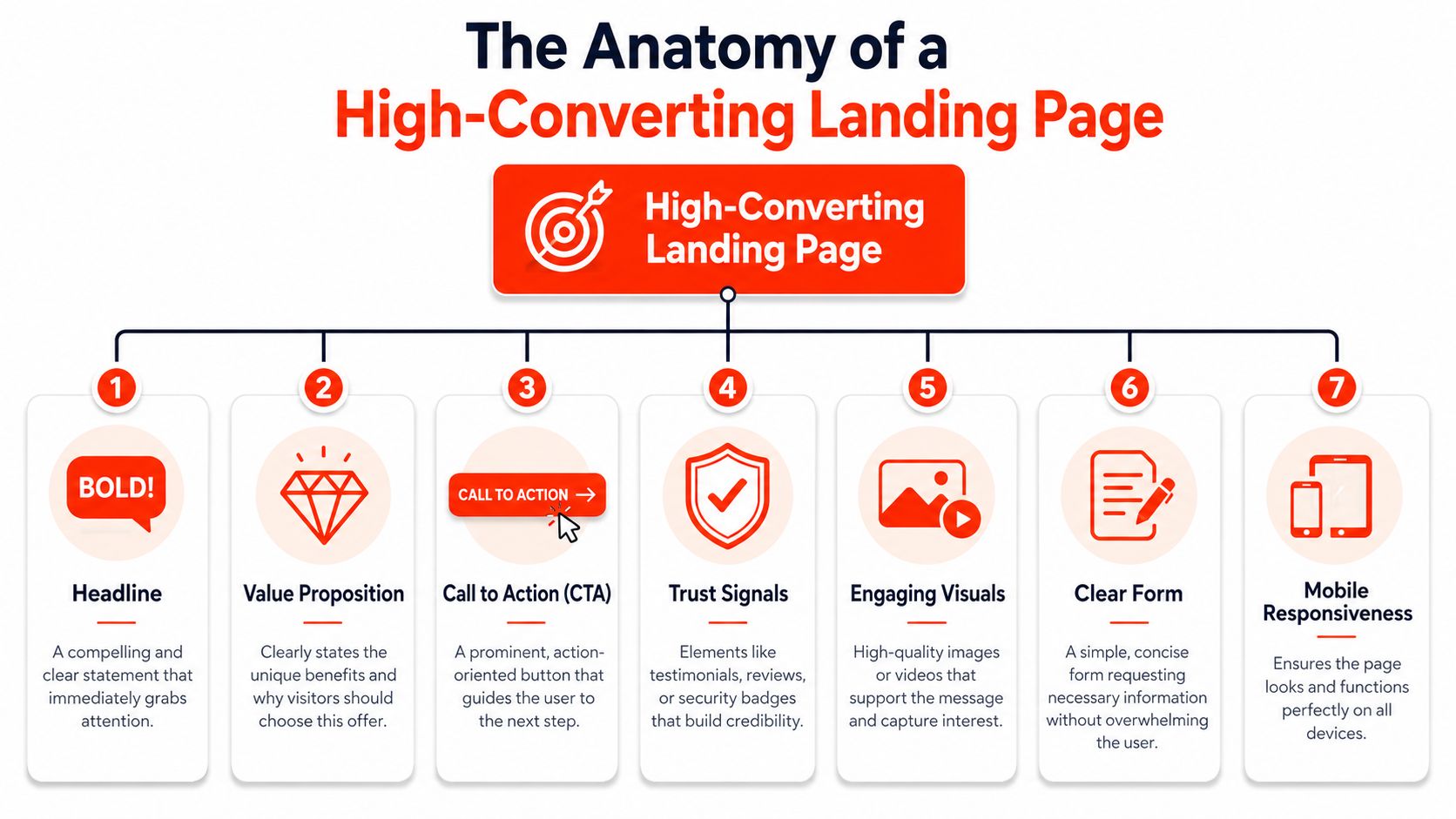
The top of the page carries most of the burden. A visitor should be able to answer three questions quickly: what is this, who is it for, and what should I do next?
That usually means:
A clear headline: Not a slogan. A plain statement of the offer or result.
A direct value proposition: What the visitor gets, why it matters, and why they should choose you.
One visible CTA: “Book a consultation”, “Get a quote”, or “Start your free trial” works better than a vague prompt.
If the page supports both search visibility and paid traffic, the structure should also align with solid SEO optimisation practices so headings, copy, and page intent remain consistent.
What makes people trust and act
After the page earns attention, it has to remove hesitation. At this point, weaker landing pages often fall apart. They ask for contact details before proving enough value.
The strongest pages usually include:
Benefit-led copy: Focus on outcomes, not internal process.
Trust signals: Testimonials, review snippets, client logos, certifications, or guarantees.
A low-friction form: Ask only for what the sales process needs.
Relevant visuals: Product screenshots, service imagery, or process illustrations that support the message.
Social proof matters, but it has to fit the offer. A local service business might benefit more from recognisable customer reviews and location cues than from a slick brand reel. A B2B software company may need interface screenshots and onboarding clarity more than lifestyle photography.
If visitors can’t tell what happens after they click the button, the CTA is too weak.
Mobile responsiveness also belongs in the anatomy, not as an afterthought. Most visitors won’t forgive broken spacing, hard-to-tap buttons, or forms that fight the keyboard on a phone. A page that feels awkward on mobile doesn’t just look poor; it feels awkward. It loses leads.
The Typical Landing Page Design Process
Many small businesses buy landing page design services without knowing how the work will unfold. That leads to mismatched expectations, missed deadlines, and launch-day surprises. A sound process prevents most of that.
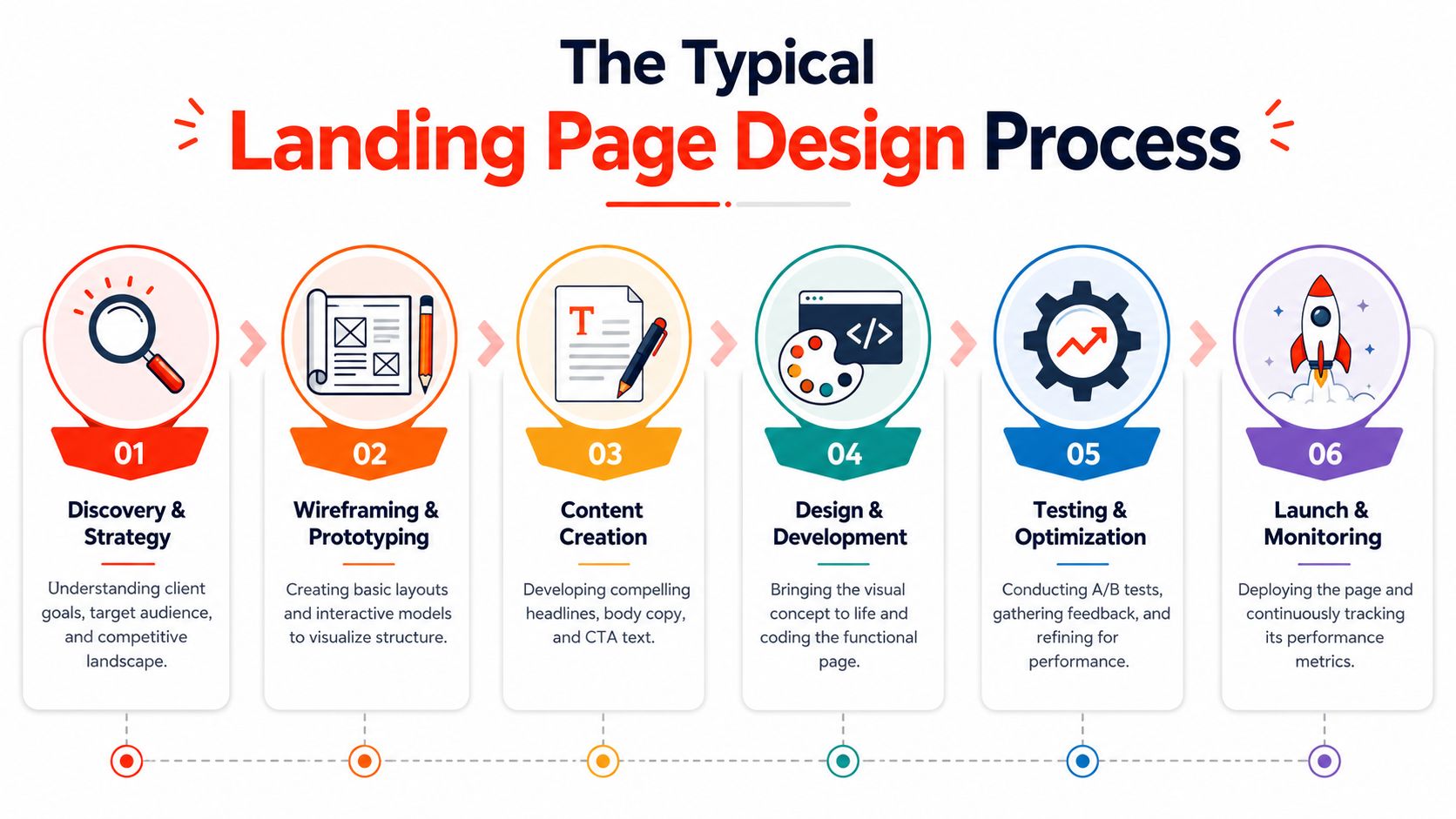
A typical project follows a sequence. The exact tools vary. The logic doesn’t.
How a project usually moves
Discovery and briefing The provider gathers campaign goals, audience details, offer information, traffic source, and desired action. During this phase, they should ask awkward but useful questions about sales follow-up, lead quality, and what counts as success.
Wireframing and prototyping Before visual design, the page structure gets mapped. The wireframe shows headline placement, social proof, form position, CTA flow, and content order.
Content creation Copy is drafted or refined. This is often the most underestimated stage. Businesses delay launches here by providing vague notes instead of a clear offer, proof points, and objections.
A provider handling the full build may combine design and development into one integrated workflow. Others hand off static designs to a developer later. If you want to understand how a broader site build works in this context, a good reference point is web design and development.
Here’s a useful visual summary of the workflow:
Where delays usually happen
The back half of the process tends to expose the practical issues.
Development and implementation: The page is built in the chosen platform, with forms, tracking, integrations, and mobile behaviour configured properly.
Quality assurance: Buttons, forms, thank-you pages, analytics events, device layouts, and loading behaviour need to be checked before launch.
Launch and initial monitoring: Once live, the team watches for form failures, tracking gaps, or obvious user drop-off points.
Most landing page delays don’t come from design. They come from unclear offers, slow approvals, and missing integration details.
Some modern providers compress this timeline by gathering requirements interactively and launching inside an all-in-one setup that already includes hosting, domain, SSL, and maintenance. Traditional agencies often move more slowly because design, development, hosting, and post-launch support sit in separate workflows. Faster isn’t always better, but unnecessary handoffs rarely help.
Understanding Landing Page Design Pricing in the UK
Pricing for landing page design services in the UK varies depending on the scope. A single template-based page for a local campaign is one job. Another is a bespoke page with advanced interactions, integrations, and a custom conversion path.
Verified UK pricing clearly shows the market. According to Bennetts Design’s UK landing page cost guide, simple landing pages typically cost £200-£500, moderately customised pages usually cost £500-£1,500, and complex custom agency builds often range from £1,500-£5,000 or more. The same guide notes that businesses can expect professional services to sit broadly between £200 and £5,000, with design complexity adding further cost depending on the level of detail required.
What changes the price
Three factors usually drive the quote more than anything else.
First, template versus custom build. A template-based page is faster and cheaper because the layout framework already exists. That works well when the offer is simple, and the brand requirements are light. A custom page costs more because the provider is shaping the journey from scratch.
Second, technical complexity. A basic contact form is straightforward. A multi-step form, CRM sync, booking flow, or payment integration adds development and testing time.
Third, who you hire, freelancers can be cost-effective for focused work. Agencies usually charge more because they bundle strategy, copy, design, development, account management, and QA.
UK Landing Page Design Cost Estimates 2026
Service Level
Typical Price Range (GBP)
Best For
Simple template-based page
£200 to £500
Small campaigns, local services, quick launches
Moderately customised page
£500 to £1,500
Businesses that need tailored messaging and integrations
Complex custom agency build
£1,500 to £5,000+
High-stakes campaigns, bespoke UX, advanced forms and tracking
Cheap quotes aren’t always bargains. Sometimes they exclude copywriting, integrations, mobile refinement, analytics setup, or revisions. The page may go live, but the business then discovers it still needs more work before it can properly support a campaign.
The right question isn’t “what’s the cheapest page?” It’s “what level of build matches the value of the traffic and the complexity of our sales process?”
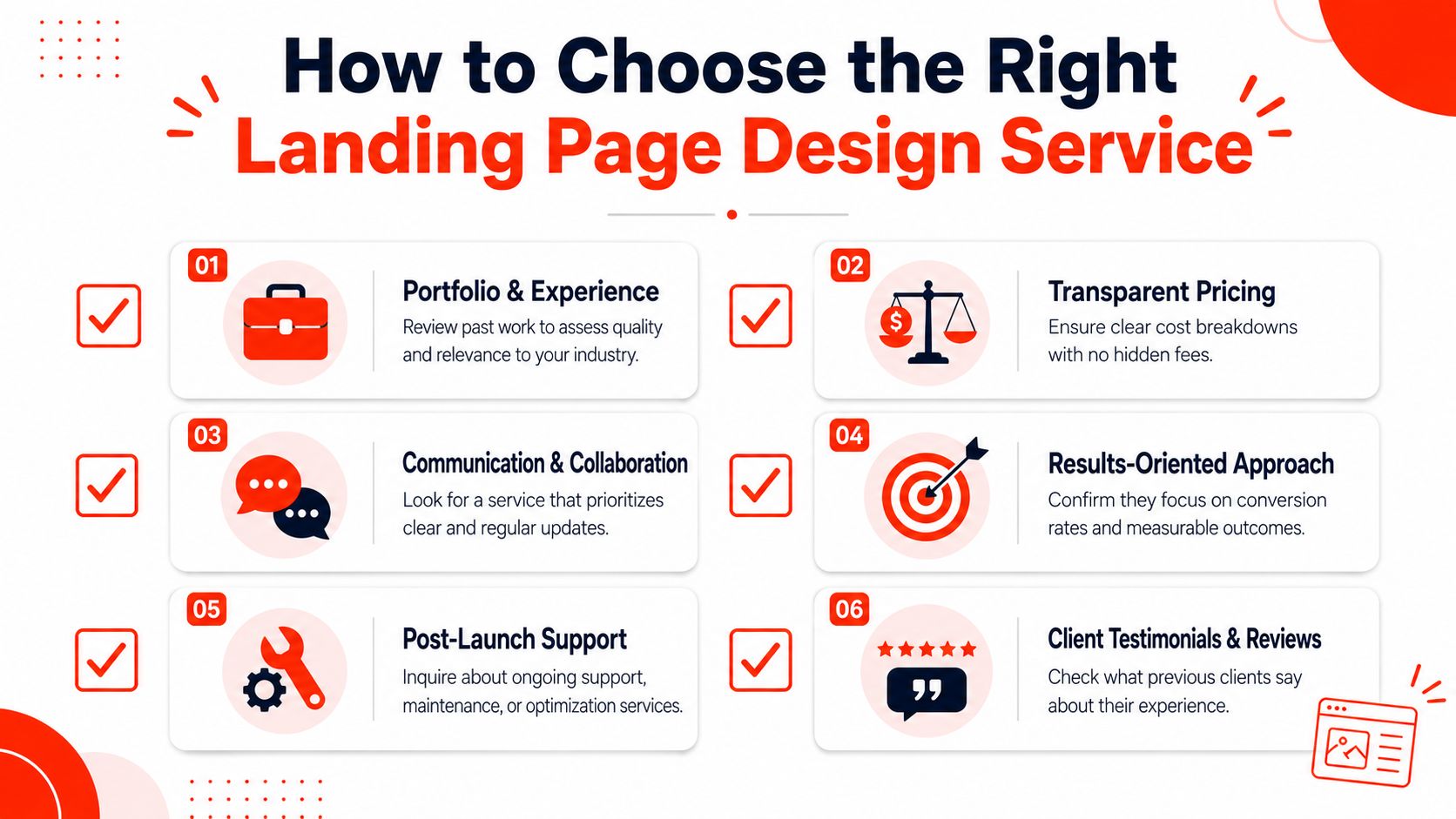
How to Choose the Right Landing Page Design Service
The wrong provider usually reveals itself in one of two ways. They either oversell a custom build you don’t need or underspec the work, leaving you with a page that looks acceptable but doesn’t convert.
UK small businesses often sit in the middle. Budget matters, but so does lead quality. That’s why the template-versus-custom decision needs more honesty than this market usually gives it.
Verified UK data highlights the trade-off. The underserved angle in the supplied data shows that 68% of UK SMEs launching marketing campaigns chose templated solutions due to budget constraints. In comparison,only 12% received post-launch conversion data to determine whether custom pages outperformed them. The same verified data states that a 2025 Rocket Internet UK study found that template-based landing pages for coaching and local service businesses achieved 74% of the conversion rates of bespoke pages at 30% of the cost, for many small firms, that makes a well-optimised template a sensible commercial choice, not a compromise.
Template or custom
Use a template-led route when the offer is straightforward, your budget is limited, and speed matters. This often suits local services, solo professionals, event promotions, and simple lead generation campaigns.
Go custom when the offer needs stronger differentiation, the sales journey is more complex, or the page has to support a premium positioning. In those cases, bespoke structure and messaging can justify the spend.
The key is whether the provider can clearly explain the trade-off. If they insist that custom always wins, they may be selling margin rather than fit. Thoughtful design still depends on why human creativity matters, even as AI website building rises, especially when messaging, trust, and user hesitation require careful judgment.
Questions worth asking before you sign
Ask these before approving any proposal:
What’s included in the build: Strategy, copywriting, design, development, integrations, analytics, revisions, and mobile QA.
What platform will the page be built on? You need to know who can edit it later.
How will leads be tracked and routed: A good-looking form is useless if leads disappear into an inbox nobody checks.
What happens after launch: Hidden costs often emerge.
One verified point matters here more than most. A 2026 UK report found that 82% of SMEs who bought a landing page were surprised by later fees for ongoing optimisation, which can cost £500-£1,200 per month. The same verified data shows that only 15% of UK landing page service providers explicitly list CRO testing in their base packages. Ask directly whether CRO is included, optional, or entirely separate.
Don’t sign a landing page proposal until you know what happens after the page goes live.
Portfolio review also needs discipline. Don’t just ask whether the pages look modern. Ask whether the provider has built pages for a similar buying journey, similar audience intent, and a similar level of offer complexity. Relevance beats visual flair.
Frequently Asked Questions
Is a landing page the same as a homepage? No. A homepage serves many visitors and many goals. A landing page is built for a single campaign and a single action.
Should I have more than one landing page? Usually, yes. Different services, audiences, and traffic sources often need different messaging. A page for Google Ads traffic may need a tighter offer than a page used in email marketing.
Do landing page design services include ad management? Not always. Some providers only design and build the page. Others also manage Google Ads, Meta ads, or tracking setup. Ask for this in writing.
How much information should the form ask for? Only what your team needs to qualify and follow up. Every extra field adds friction.
Can a template still work well? Yes. For many UK small businesses, a well-optimised template is a practical and commercially sound option.
If you want a faster route to a professional landing page or a complete business website, 1stNet AI Ltd offers UK-based design and development with hosting, SSL, maintenance, and search optimisation bundled into one service. It’s built for small businesses that want a clear process, predictable pricing, and a faster path from idea to live site.