It is Monday morning. You have a gap in the diary, a tight budget, and no appetite for learning another ad platform to get a few enquiries through the door. Free internet advertising sites can help with that. UK business directories give small businesses a practical way to show up where people already look for local suppliers, reviews, and quick comparisons.
However, they are not a substitute for a proper sales process or a website that does its job. Instead, they offer a low-cost route to greater visibility.
The smart approach is to treat these platforms as channels with different intent. Certain directories are built for local discovery, while others strengthen trust and social proof. A few are especially useful for testing a short-term offer or filling spare capacity. That matters because a trades business, local clinic, consultant, and retailer will not get the same result from the same site.
This guide follows that logic. It groups free advertising sites by the kind of buyer intent they capture, so you can spend your limited time on the listings most likely to produce enquiries.
Before you chase free traffic, run a quick pre-flight check on your website. Can a visitor tell what you do in five seconds? Is your phone number clickable on mobile? Does each service page cover one clear offer, one location, and one next step? If the answer is no, even strong listings will send visitors to a page that leaks leads. If you also want your business to appear in newer answer engines, it helps to prepare your site for ChatGPT, Google Gemini, and AI search results.
Website projects also take time. Even simple sites can stall on copy, images, approvals, or unclear service pages. If your current site is slow, dated, or missing key conversion points, fix the foundations first, then use these free listings to send people to a site that turns attention into calls, forms, and booked jobs.
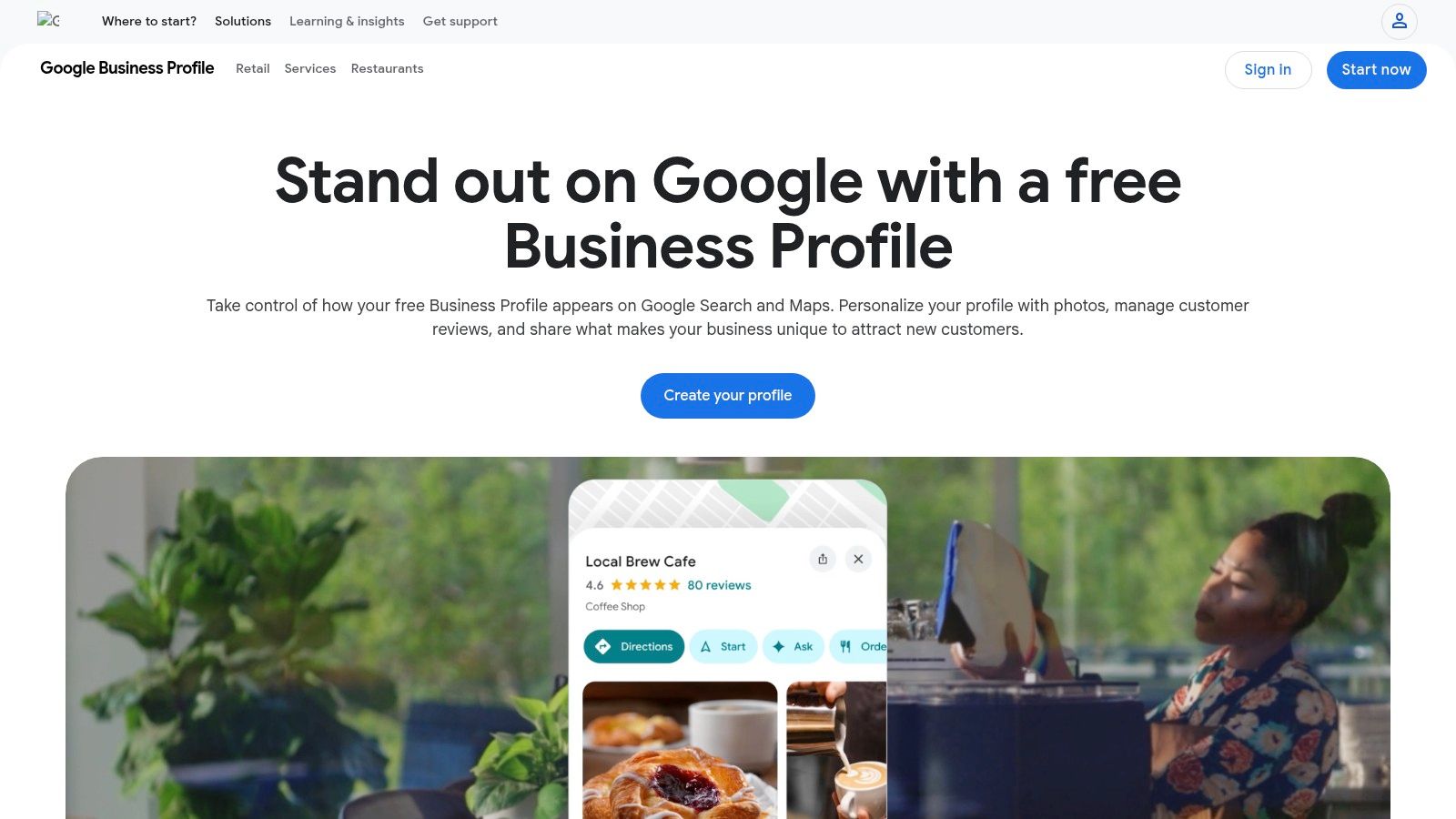
A customer nearby needs what you sell, searches on their phone, and wants an answer fast. Your Google Business Profile often decides whether they call you, visit your site, or move on to the business above you.
For UK small businesses, this is usually the first free listing to sort out properly. It puts your business into Google Search and Google Maps with your name, address, phone number, opening hours, photos, services, posts, and reviews. In this guide’s framework, it sits firmly in the local-intent category. People finding you here are often much closer to taking action than someone casually scrolling social media or browsing a general directory.
Why does it deserve first place?
If you serve a town, city, or defined service area, make this your top priority. It suits trades, clinics, salons, solicitors, accountants, restaurants, retailers, and any business that relies on nearby customers, making quick decisions.
What separates a profile that brings leads from one that exists is attention to detail:
Choose the right primary category: This affects which searches you appear for. Get specific.
Add real services: List actual jobs or service lines, not just one broad label.
Upload current photos to showcase your premises, team, vehicles, products, or finished work.
Keep hours accurate: Bank holidays, seasonal changes, and temporary closures matter.
Consistently ask for reviews: Fresh, credible reviews build trust before anyone reaches your website.
Treat the profile like a working sales asset, not a box to tick.
There are trade-offs. Verification can be awkward, edits do not always go live immediately, and review management takes ongoing effort. Google also expects consistency. If your address, phone number, or business category conflicts with what appears on your website, performance can suffer, and verification can become more difficult.
That is why the pre-flight checklist matters. Before pushing traffic from any free advertising site, make sure your website is clear, mobile-friendly, and built to convert. A weak contact page or slow mobile experience wastes the visibility your profile earns. If you need to tighten that up, start with this guide to SEO-friendly web design for small business websites.
Lead quality here is usually stronger than from broad free directories because the search intent is clearer. Someone searching for a service plus a location is not browsing for entertainment. They are often comparing options and are eager to make contact.
2. Bing Places for Business
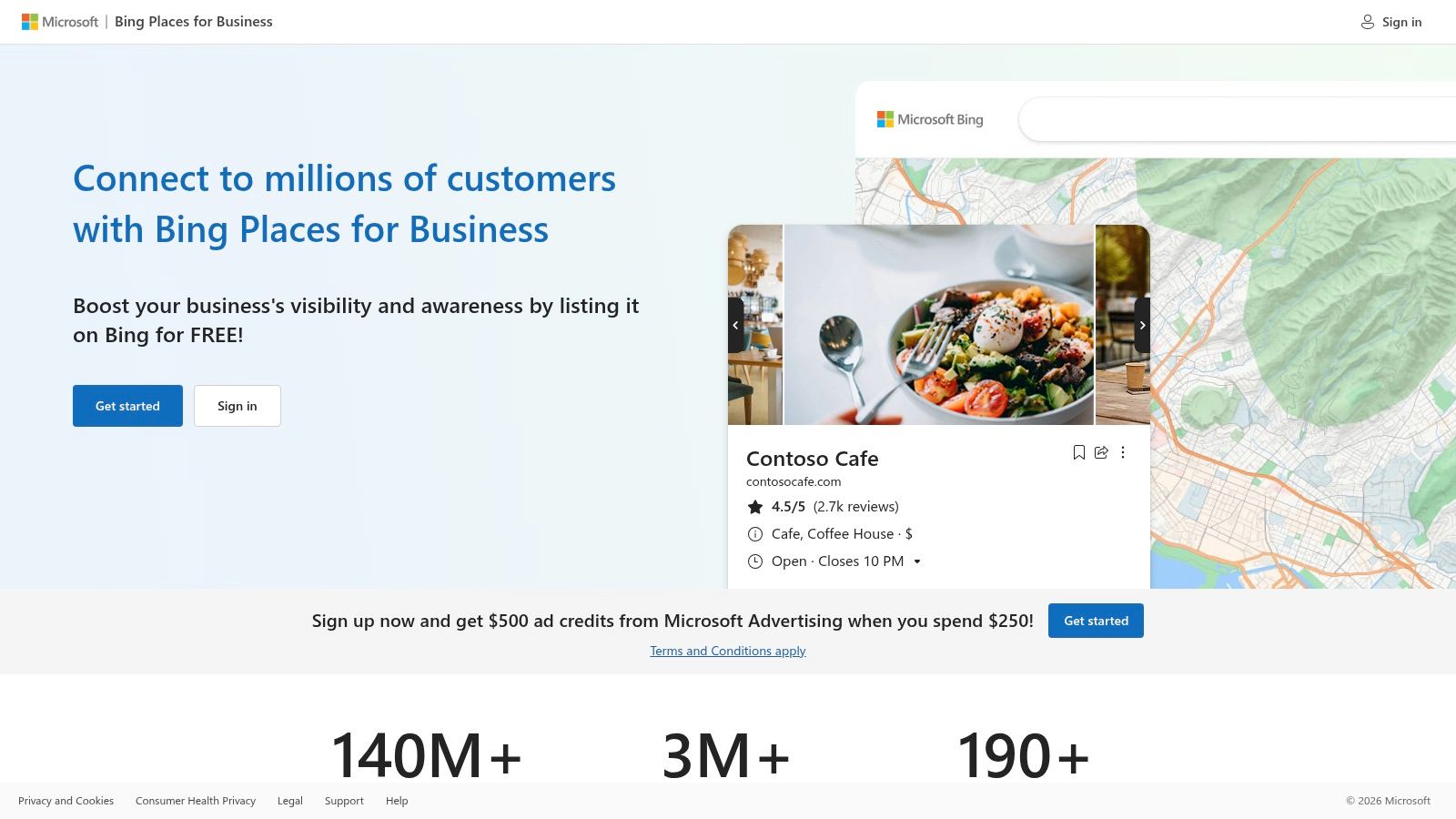
Bing Places for Business is the easiest “yes, obviously” listing after Google. It won’t usually match Google for raw visibility in the UK, but it doesn’t need to. It gives you extra coverage with very little extra effort, especially if you can import details from your Google profile.
The main appeal is efficiency. You can get your business details, photos, hours, and categories live across Bing and related Microsoft surfaces without building a second listing from scratch.
The easy-win setup
This works best for businesses that already have a clean Google Business Profile. Import, check every field, then correct anything that lands oddly. Opening hours, service areas, and phone numbers are where small errors tend to creep in.
Bing is especially useful if your audience skews office-based, corporate, or less tech-curious. Plenty of people still use the default browser and search settings, and some buyers will find you there first.
A few things matter more than people think:
Match your NAP details: Keep name, address, and phone exactly aligned with your core listings.
Use proper categories: Broad categories reduce relevance. Specific ones improve matching.
Keep announcements fresh: Even simple updates make the listing look maintained.
If Google is your main local storefront, Bing is the extra road sign you’d be silly to ignore.
The downside is straightforward. Traffic volume is smaller, and insights are usually less central to day-to-day decision-making. Still, as free internet advertising sites go, this one is low effort and sensible.
3. Apple Business Connect
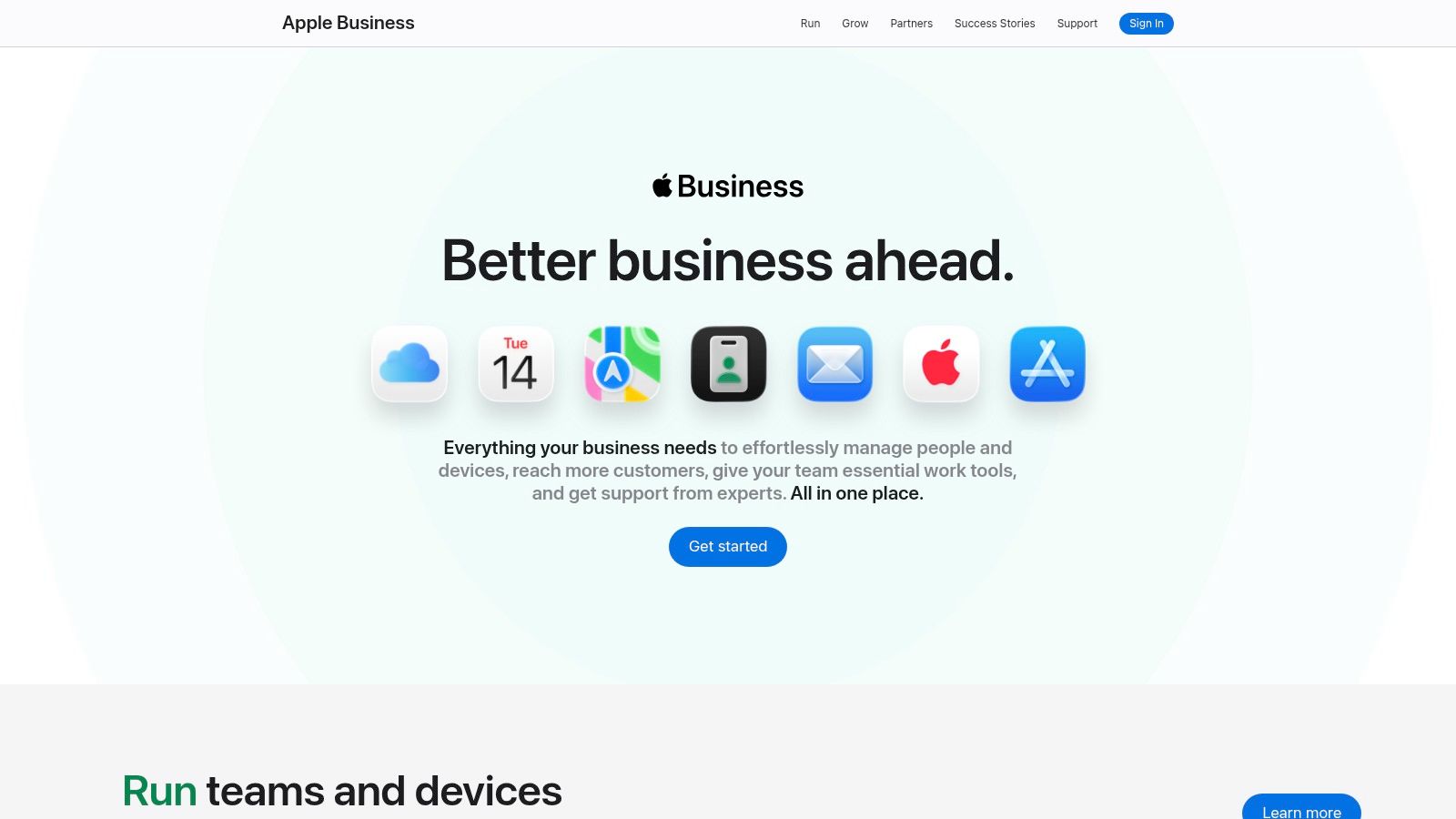
Many UK businesses ignore Apple because they focus on Google first. That’s understandable, but Apple Business Connect deserves attention if customers use iPhones, ask Siri for directions, or rely on Apple Maps while travelling.
Its Place Card lets you control core details, including your logo, photos, business category, contact information, and actions such as calls, directions, and website visits. For local businesses, that’s another clean citation and another trusted place for customers to confirm you’re legitimate.
Best for iPhone-heavy local audiences
This platform is simpler than Google Business Profile, which is both good and bad. Good because it’s faster to maintain. Bad because it doesn’t offer the same publishing depth.
Where it shines is consistency. Suppose a customer checks your hours on Apple Maps and sees accurate information, which removes friction. If they tap for directions from their phone, that’s a useful customer action from a free listing.
Keep your approach tight:
Use your brand assets effectively: include a recognisable logo and up-to-date imagery.
Align details with Google and Yell: Consistency builds trust and reduces confusion.
For service businesses, Apple won’t usually be your strongest standalone lead source. For local shops, cafés, clinics, salons, and trades, it’s part of a solid visibility stack. It’s one of those platforms that rarely feels exciting, but often helps more than owners realise.
4. Yell (Free Business Listing)
Yell’s free business listing earns its place in a UK small business setup for one reason. People know the brand, and search engines recognise it as a trusted directory.
That makes Yell more useful for validation than for volume. If you are working through this guide by intent, file Yell under local directory visibility. It helps customers confirm that you are a real business and strengthens the consistency of your business details across the web.
Best used for credibility and citation consistency
Yell gives you the basics: business name, contact details, categories, description, photos, opening hours, and a website link. For many small firms, that is enough. The main win is getting another credible mention of your business online, especially if your name, address, phone number, and website match what appears elsewhere.
This matters before you chase more free traffic. If someone clicks through from Yell and lands on a dated site, a slow page, or an unclear service page, the listing has done its job, but the website has not. That is why your pre-flight checklist matters here. Check that your contact details match exactly, your key service pages are easy to understand, and your site is built to convert local visitors. A clean listing works harder when paired with an SEO-friendly web design approach on your own site.
There is a trade-off. Yell can send leads in some sectors, but I would not budget for that to happen consistently. Trades, home services, and other local categories may see occasional enquiries. Plenty of businesses will get little direct response and still benefit from the citation value.
Use it with the right expectations:
Create the listing for trust signals: It supports your wider local presence.
Keep business details identical everywhere: Small inconsistencies create doubt.
Add real photos and a specific description: Generic profiles are easy to ignore.
Be ready for sales contact: Upsell follow-up after signup is common.
Yell is worth the setup time because it is quick, familiar, and practical. Just give it the right job in your marketing mix. Use it as part of your local foundation, not as your main source of enquiries.
5. FreeIndex
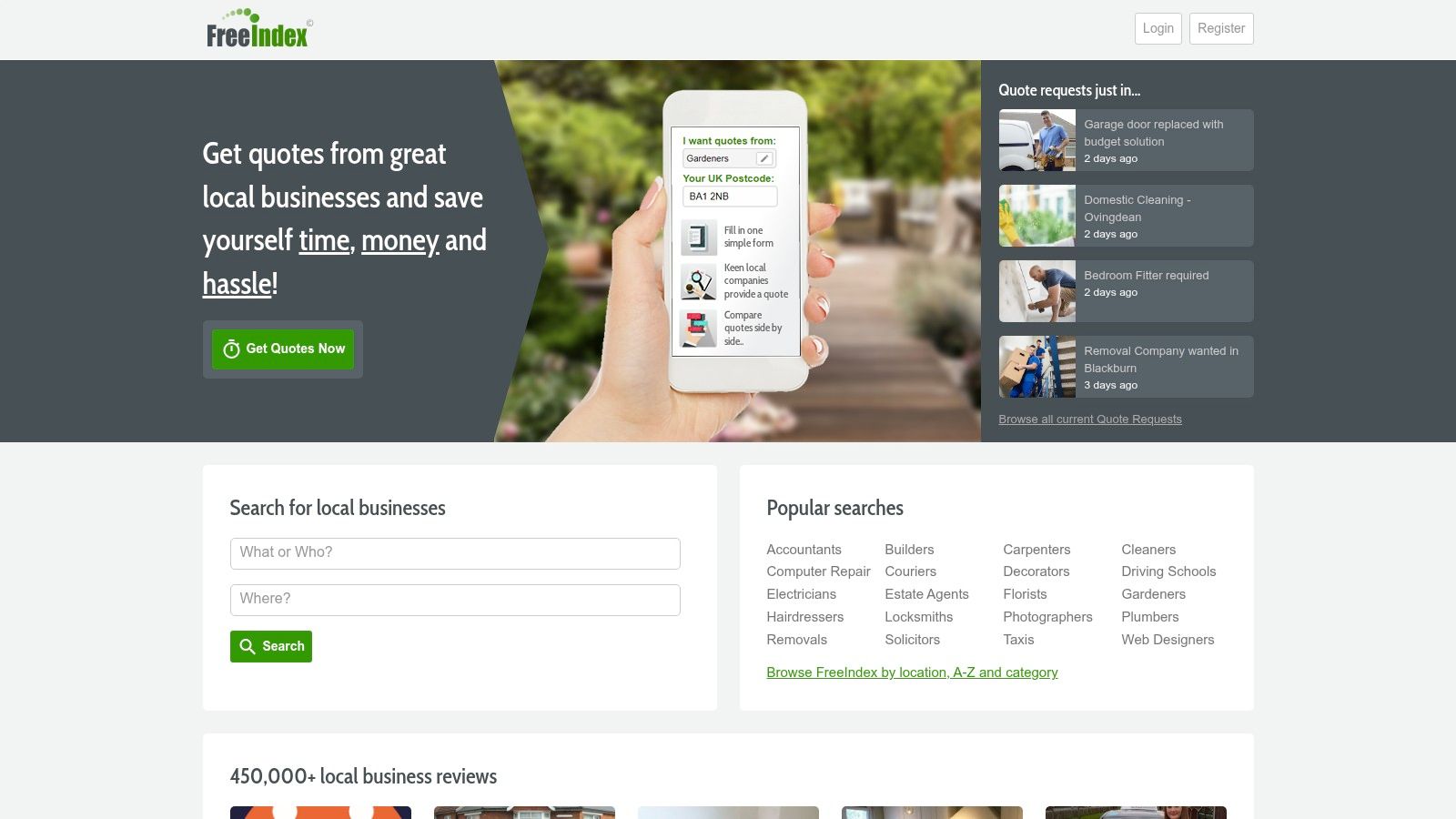
FreeIndex is one of the few UK-focused directories that can be more than a citation play. It provides a profile, service descriptions, images, reviews, and an enquiry form, making it more practical for small local businesses that want quote-style leads.
I’ve seen directories like this work best for trades, cleaners, photographers, tutors, repair services, and specialist local providers. If the buyer is comparing a few options and wants to send a quick enquiry, FreeIndex can accommodate that behaviour.
Strong fit for quote-led local services
The appeal is practical. Prospects can understand what you do, view examples, and contact you with minimal friction. That’s better than a bare listing with only a phone number.
Still, lead volume can be uneven. Some niches get useful enquiries. Others get very little. That’s normal with free internet advertising sites, so don’t judge performance after a few days.
To improve your odds:
Write specific services: “Emergency boiler repair” beats “heating services”.
Use images with context: Show actual work, not generic stock photos.
Respond quickly: Directory leads go cold fast when several businesses are contacted at once.
This platform won’t replace Google Business Profile or your own website. It can, however, become a useful side channel for service-led businesses that need another free place to capture enquiries.
6. Yelp for Business (UK)
Yelp for Business UK is less central for many UK businesses than it is in some other markets, but it still has a role. The role isn’t mass lead generation. It’s reputation coverage.
A claimed Yelp profile gives you another public business page where prospects can inspect your details, photos, and reviews. That matters, as prospects often look up your business name directly and check multiple sources before contacting you.
Reputation coverage beyond Google
Some owners skip Yelp because the lead flow feels uncertain. That’s fair. But buyers don’t always discover you in a straight line. They might find you on Google, then search your name again, then scan review sites.
That’s why I treat Yelp as defensive visibility. It helps you control what people see when they’re verifying your business’s credibility.
A few practical notes:
Claim the profile even if you won’t use it heavily: Unclaimed listings often look neglected.
Monitor reviews regularly: A stale review thread creates the wrong impression.
The downside is familiar. You may get sales prompts for paid options, and some sectors in the UK will see patchy value. Still, if you care about how your business appears across the wider web, Yelp earns a place on the list.
7. Nextdoor Business Page (UK)
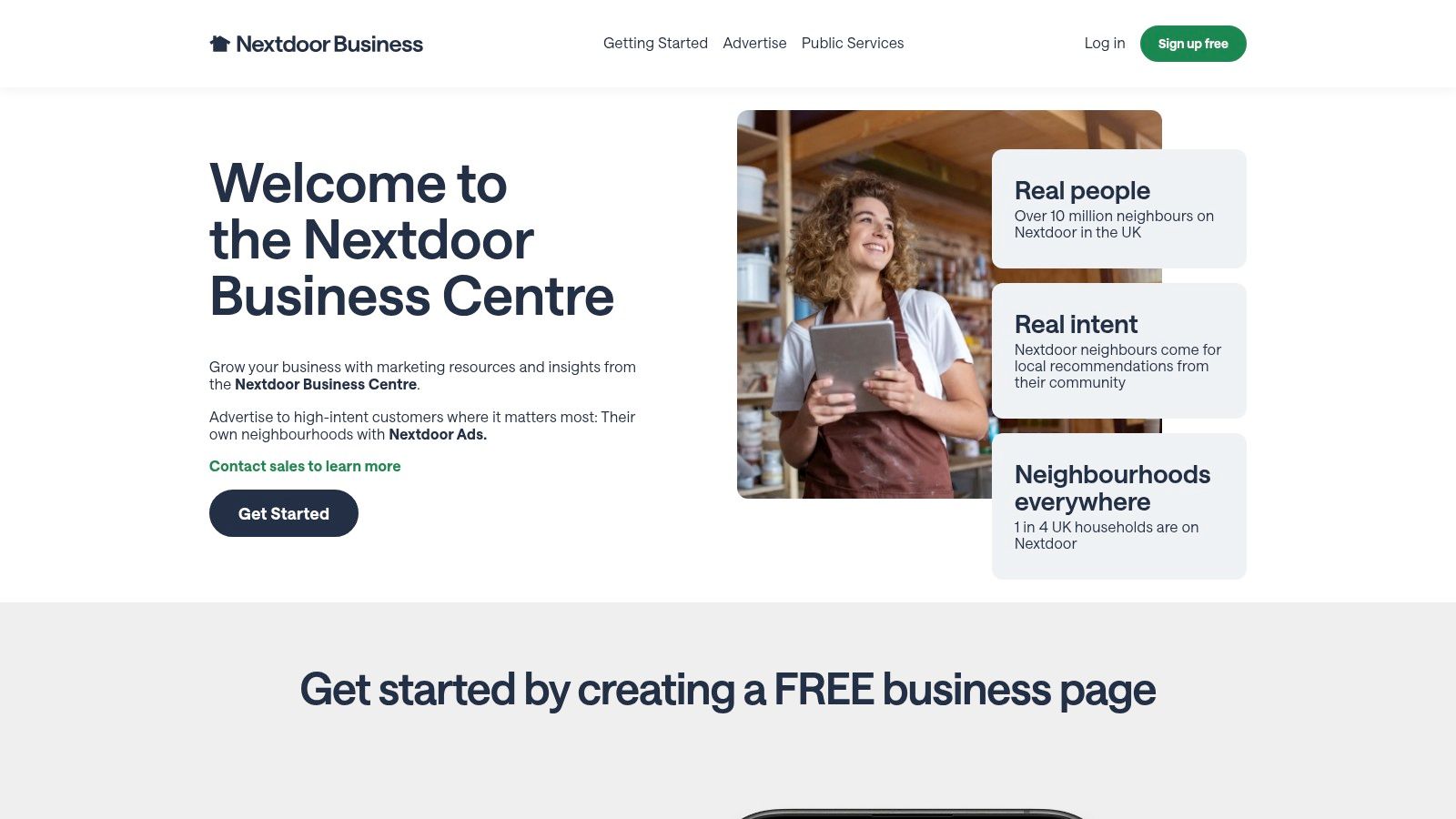
Nextdoor for Business UK is one of the few free internet advertising sites built around neighbourhood trust rather than broad search visibility. That makes it useful for local services, community-facing shops, home improvement businesses, pet services, and anyone whose customer base is heavily postcode-driven.
The platform lets you create a business page, collect recommendations or favourites, and publish local updates. When a neighbourhood is active, it can create real visibility with nearby residents in your service area.
Hyperlocal works when the neighbourhood is active
Nextdoor is not a universal winner. In some areas, it’s lively and useful. In other words, it’s quiet. That means results depend heavily on local participation, not just on how well you write your profile.
Where it works, it works because the context is local and personal. People ask for recommendations for cleaners, electricians, dog walkers, gardeners, and nearby specialists. A visible, credible business can benefit from that pattern.
Local recommendation platforms reward businesses people already feel comfortable mentioning to neighbours.
Use it if your business relies on trust and local proximity. Be realistic, though. The interface often nudges businesses toward paid promotion, and the organic posting options can feel limited compared with social channels.
8. Facebook Page
A Facebook Page remains useful because it does three jobs at once. It acts as a public profile, a content channel, and a messaging touchpoint. For UK small businesses, it’s still one of the more flexible free internet advertising sites if you use it properly.
The mistake is using it like a dumping ground for random updates. The better approach is to treat it as social proof. Show finished work, answer common objections, post testimonials, and give people a fast way to message you.
Best for social proof and repeat visibility
Facebook works particularly well for businesses with visual output or local community ties. Builders, fitters, salons, bakeries, estate agents, personal trainers, event suppliers, and independent shops can all demonstrate their work in ways that directories can’t.
One important rule: Marketplace isn’t the right route for pure service businesses. Use your Page and relevant local Groups instead.
Post proof, not slogans: Before-and-after photos, short videos, real jobs completed.
Use messaging deliberately: Reply fast and keep answers simple.
Pin your best offer or service explainer: Don’t bury your strongest message.
If you want your page content to attract both search traffic and social attention, solid SEO copywriting for service pages and supporting content makes the traffic you generate from Facebook more likely to convert once people land on your site.
9. Gumtree (Services)
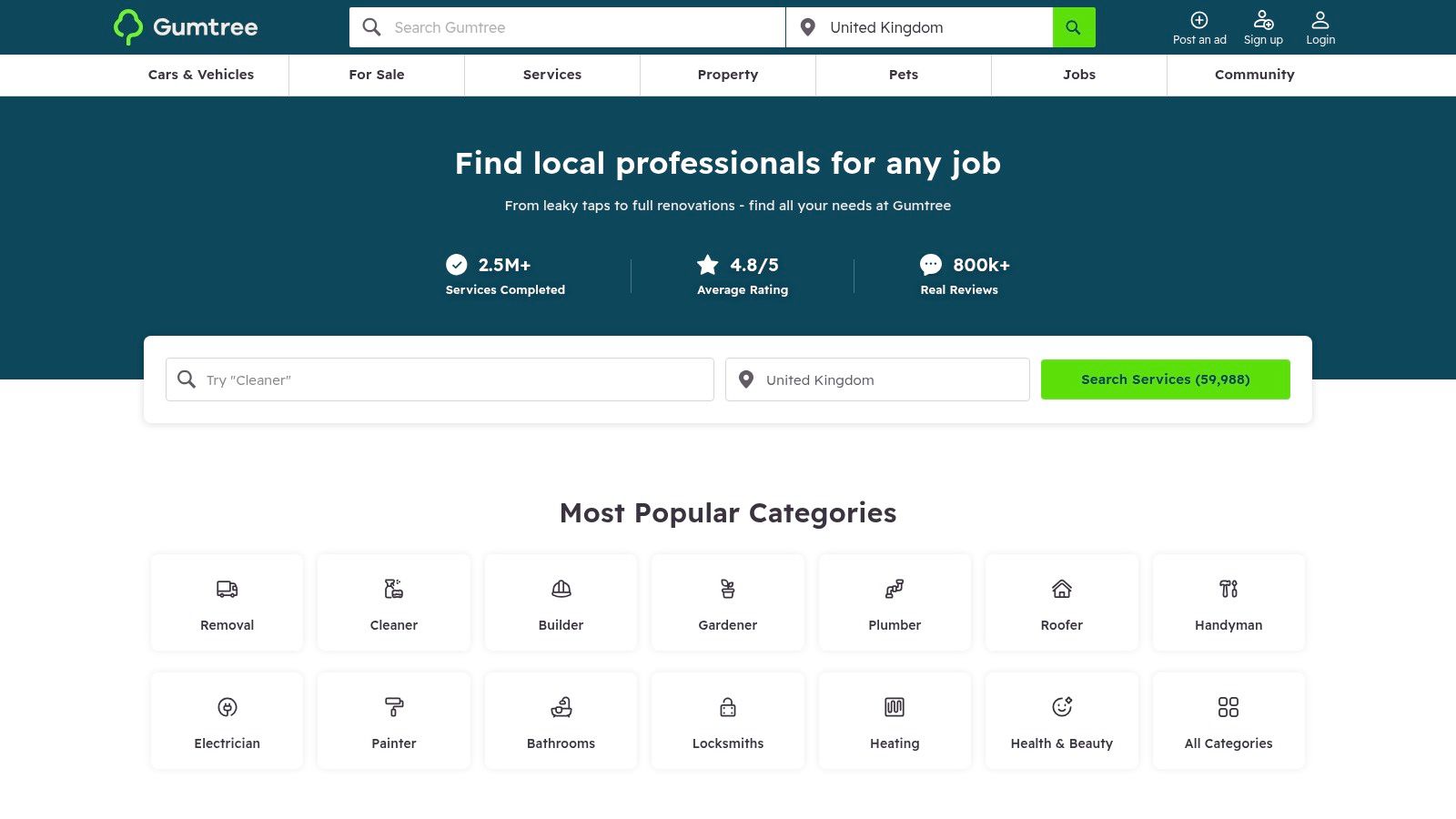
A common small-business problem is an empty slot in the diary and no time to build a full campaign around it. Gumtree Services can help in that situation. It gives UK businesses a quick way to present a clear local offer to people who are already browsing for help.
This falls firmly into the classifieds section of this guide. That matters because classifieds attract a different kind of intent from search listings or social platforms. People on Gumtree often want a fast answer, a clear price, and a nearby provider. If your website is slow, vague, or missing trust signals, the free traffic usually goes nowhere. Check the basics first. Mobile speed, service area, reviews, and a simple contact route all need to be in place before you spend time posting ads.
Best used for short-term demand and straightforward services
Gumtree works best for offers that are easy to understand and easy to buy. Fixed-price cleaning packages, garden clearance, handyperson jobs, emergency callouts, tutoring, pet services, and one-off admin support all fit the platform better than high-ticket consulting or brand-led creative work.
The trade-off is straightforward. You can get visibility quickly, but you often need to filter harder. Vague enquiries, price shoppers, and low-context messages are part of the channel, so the ad needs to do more of the qualifying work up front.
Use it with discipline:
Lead with the exact service: Say “boiler repair in Leeds” or “end of tenancy cleaning in Bristol”, not a broad company slogan.
Set expectations early: Include area served, typical response time, and whether you offer fixed pricing or quotes.
Send people to a conversion-ready page: Your ad should support the sale, not carry the whole thing.
For many UK small businesses, Gumtree is a tactical channel rather than a core asset. Used selectively, it can help fill spare capacity and test local demand without adding much cost.
10. Freeads.co.uk
Freeads.co.uk is a straightforward UK classifieds platform that’s useful for testing local offers without much setup friction. It’s not where I’d send a premium brand first, but it can help freelancers, solo operators, and smaller agencies trial messaging or promote tactical services.
Its strength is simplicity. You can get a service listing live quickly, see whether it attracts attention, and adjust your wording without a big time commitment.
A simple testing ground for local offers
This platform works best when you already know what action you want. Maybe you need to fill open appointments this week. Maybe you want to test whether a low-friction introductory service gets traction in a specific town.
What it doesn’t do well is carry your entire brand story. That means the listing needs support from your site, reviews, and your stronger local profiles.
Use it carefully:
Promote one clear offer: Don’t cram multiple services into one ad.
Qualify prospects early: Ask for job details or postcode before quoting.
Treat it as a test channel: Keep what works, drop what doesn’t.
The most effective free online advertising sites usually improve your long-term visibility. Classifieds like this are more tactical. That doesn’t make them bad. It just means you should use them with the right expectations.
Top 10 Free Internet Advertising Sites Comparison
Platform
Core features
Visibility & Quality ★
Value & Cost 💰
Best for 👥
Unique/Edge ✨
Google Business Profile
Maps & local 3‑pack, posts, photos, messaging, reviews
★★★★★ 🏆
💰 Free, verification & active management required
👥 Local businesses seeking high‑intent leads
✨ Highest local intent; review + map prominence
Bing Places for Business
Free listing, photos, hours, import/sync from Google
★★☆☆☆
💰 Free, easy sync from Google
👥 Edge/Windows users; incremental reach
✨ Quick import from GBP; Microsoft ecosystem presence
Apple Business Connect
Place Card for Apple Maps, Siri actions, photos
★★★☆☆
💰 Free, simpler insights
👥 iPhone‑heavy audiences
✨ Controls iOS place card & Siri directions
Yell (Free Listing)
NAP, website, description, categories, reviews
★★★☆☆
💰 Free, post‑signup sales outreach possible
👥 UK businesses needing recognised citations
✨ Established UK brand for citation consistency
FreeIndex
Profile with services, images, enquiry form, reviews
Hyperlocal pages, posts, favourites, and local reviews
★★★☆☆
💰 Free, optional paid Local Deals
👥 Neighbourhood‑focused businesses
✨ Highly local recommendations & community trust
Facebook Page
Posts, messaging, reviews, media (video/reels), groups
★★★★☆ 🏆
💰 Free, organic reach may be limited
👥 Broad consumer audiences & portfolios
✨ Huge social reach + groups for local engagement
Gumtree (Services)
Classified listings, service categories, paid boosts
★★☆☆☆
💰 Free or low‑cost boosts for visibility
👥 Budget‑conscious local leads & quick trials
✨ Fast listing; strong UK classifieds traffic
Freeads.co.uk
Free ads with paid upgrades, Services area, fast posting
★★☆☆☆
💰 Free, optional paid boosts
👥 Freelancers & tactical local promotions
✨ Quick, simple workflow for testing offers
From Free Listings to Sustainable Growth
A common pattern plays out like this. A business owner spends an afternoon setting up free listings, sees a few profile views, then hears nothing. The problem usually is not the listing. It is the gap between being found and giving people a clear reason to enquire.
Free advertising sites work best as a system. Google Business Profile, Bing Places and Apple Business Connect capture local search intent. Yell, FreeIndex and Yelp support trust and citation consistency. Facebook and Nextdoor help people check your credibility, see recent activity and message you. Gumtree and Freeads are better for testing a specific service, offer or area than for building your whole lead pipeline.
That is the framework to use. Pick platforms based on buyer intent, not on how long a directory list looks.
A quick filter helps.
Skip weak sites that look abandoned, have thin business pages, or are full of irrelevant listings. Prioritise platforms your customers already use, platforms that appear in search results for your service, and platforms you can keep updated without adding another weekly admin job. Free only works when the time cost stays sensible.
Before sending any traffic to your site, run a pre-flight check. Can a visitor tell within a few seconds what you do, where in the UK you work, who you help, how to contact you, and why they should trust you? If not, the listing may still generate clicks, but those clicks will leak away.
For most small businesses, the website standard required here is not complicated. It needs a clear service page, obvious contact details, proof such as reviews or case studies, fast mobile loading, and a simple enquiry path. A typical brochure-style website for a UK small business often sits in the low thousands of pounds, depending on page count, functionality, and who builds it. The better question is not “what is the cheapest site?” but “will this page turn attention into calls, forms and bookings?”
Profile completeness also matters more than many owners expect.
Incomplete opening hours, missing photos, outdated service descriptions and unanswered reviews all reduce trust. They also make it harder for search engines and AI-led discovery features to understand your business properly. As noted earlier, the firms that get more from free listings usually handle the basics consistently.
Keep the approach practical. Start with the platforms most aligned to your customers’ intent. Finish every profile properly. Send visitors to a website that answers questions fast and makes contact easy. That is how free listings become a repeatable source of enquiries instead of another half-finished marketing task.
Launch your website in an hour with a domain, SSL, hosting, and maintenance included. 1stNet AI Ltd website team transforms your online presence with a stunning website, built for UK small businesses that need results without the usual delays and jargon. All work comes with a 30-day money-back guarantee, and the team offers an interactive live chat system to design your website in real time. If you need a business site, e-commerce build, landing page, or a fully managed launch with SEO-friendly setup, call 0204 577 2255 and get moving. Don’t miss this chance to enhance your brand.