Your phone’s buzzing with enquiries, your Google rankings still look decent, yet the question is whether people are seeing you inside AI answers before they ever reach your site. If you run a UK small business, that uncertainty matters because buyers aren’t just scanning blue links anymore, they’re asking AI Overviews and chat-style search tools to do the filtering for them. The ai search visibility tools below help you see where your brand shows up, where rivals are stealing the mention, and which pages AI systems are pulling into answers. They’re not magic. They’re a practical way to stop guessing and start measuring what AI search is doing to your leads, your local reputation, and your pipeline.
Table of Contents
- 1. SISTRIX
- 2. Authoritas
- 3. Pi Datametrics
- 4. BrightEdge AI Catalyst + Generative Parser
- 5. SE Ranking AI Results / AI Search Toolkit
- 6. AccuRanker AccuLLM + AIO Page
- 7. Semrush Position Tracking + AI Visibility Toolkit Semrush One
- 8. Don’t just track visibility
- 9. WordLift
- Top 10 AI Search Visibility Tools, Feature Comparison
- Choosing Your Tool and Building an AI-Ready Website
1. SISTRIX
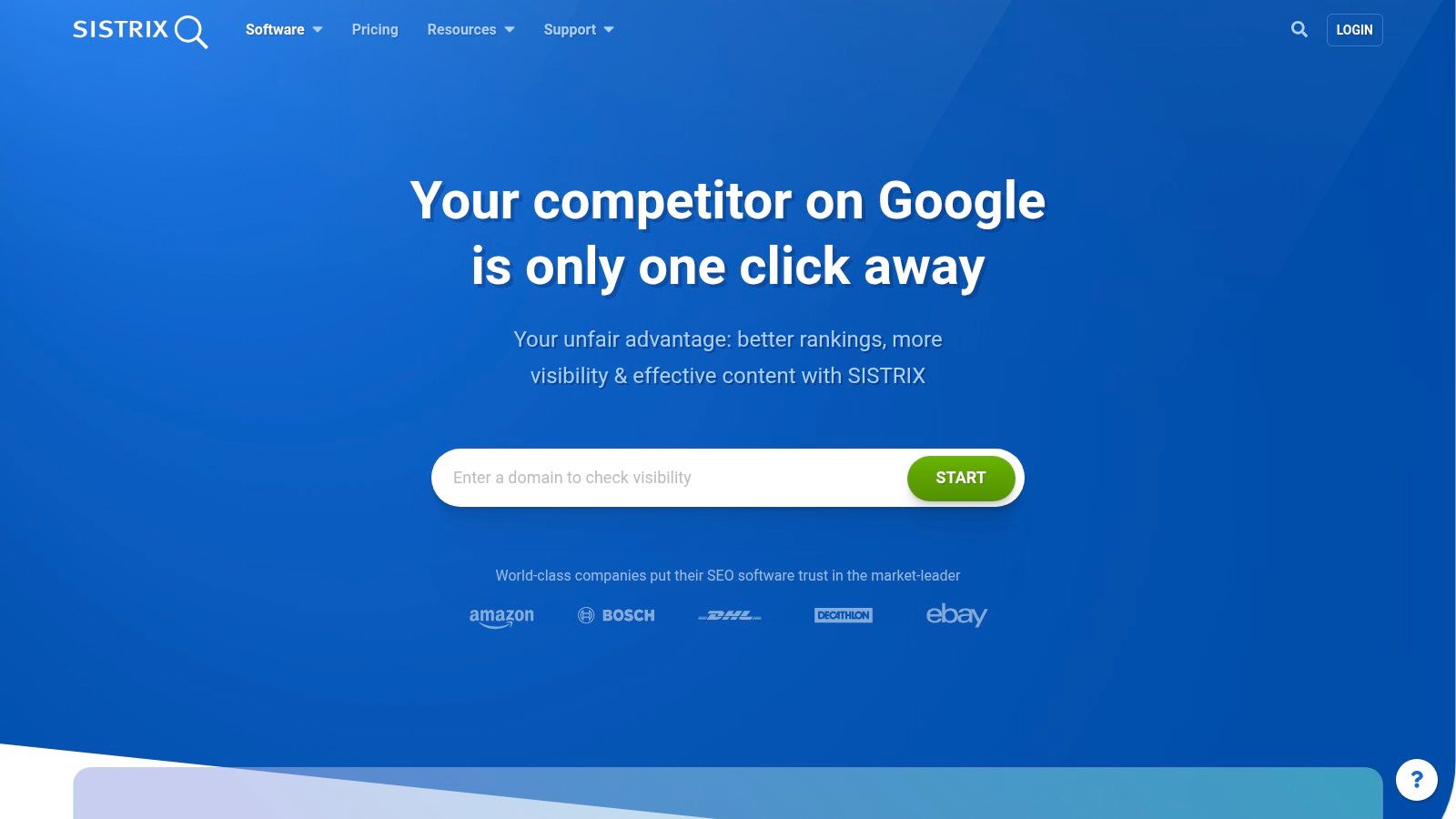
SISTRIX gives you one place to compare classic SEO with AI search without dragging you into enterprise clutter. It brings together Visibility Index trends, organic rankings, and AI Overview detection, so you can tell whether a change in search visibility came from rankings, a SERP feature, or both. For UK small businesses, that matters because you need a stable benchmark, not another dashboard full of numbers that do not help you make a decision.
Where SISTRIX fits in practice
The platform’s UK-specific visibility history helps when you need a straight commercial answer, such as whether the site improved after a content update or whether a SERP change is masking the result. That is useful for agencies and owner-managed firms that need a metric they can explain without turning every review into a terminology lesson. AI Overview detection is built into rank tracking across countries, which gives you a cleaner link between traditional SEO reporting and the AI layer.
Practical rule: use SISTRIX as the benchmark tool, not the whole strategy. If the site is underperforming, the fix is usually better content, better structure, and stronger technical foundations, not just a more polished report.
The limitation is clear. SISTRIX tracks AI Overviews separately, so its headline Visibility Index does not yet combine them into one figure, which means you still need to read the dashboard carefully. It is also lighter on content ideation than some AI-first platforms, so it will not sort out your editorial workflow on its own.
- Good for: UK benchmarking, historical trend tracking, and agencies that need a dependable SEO yardstick.
- Watch out for: treating the Visibility Index as a full picture of AI search, because it isn’t one.
- Website: SISTRIX
2. Authoritas
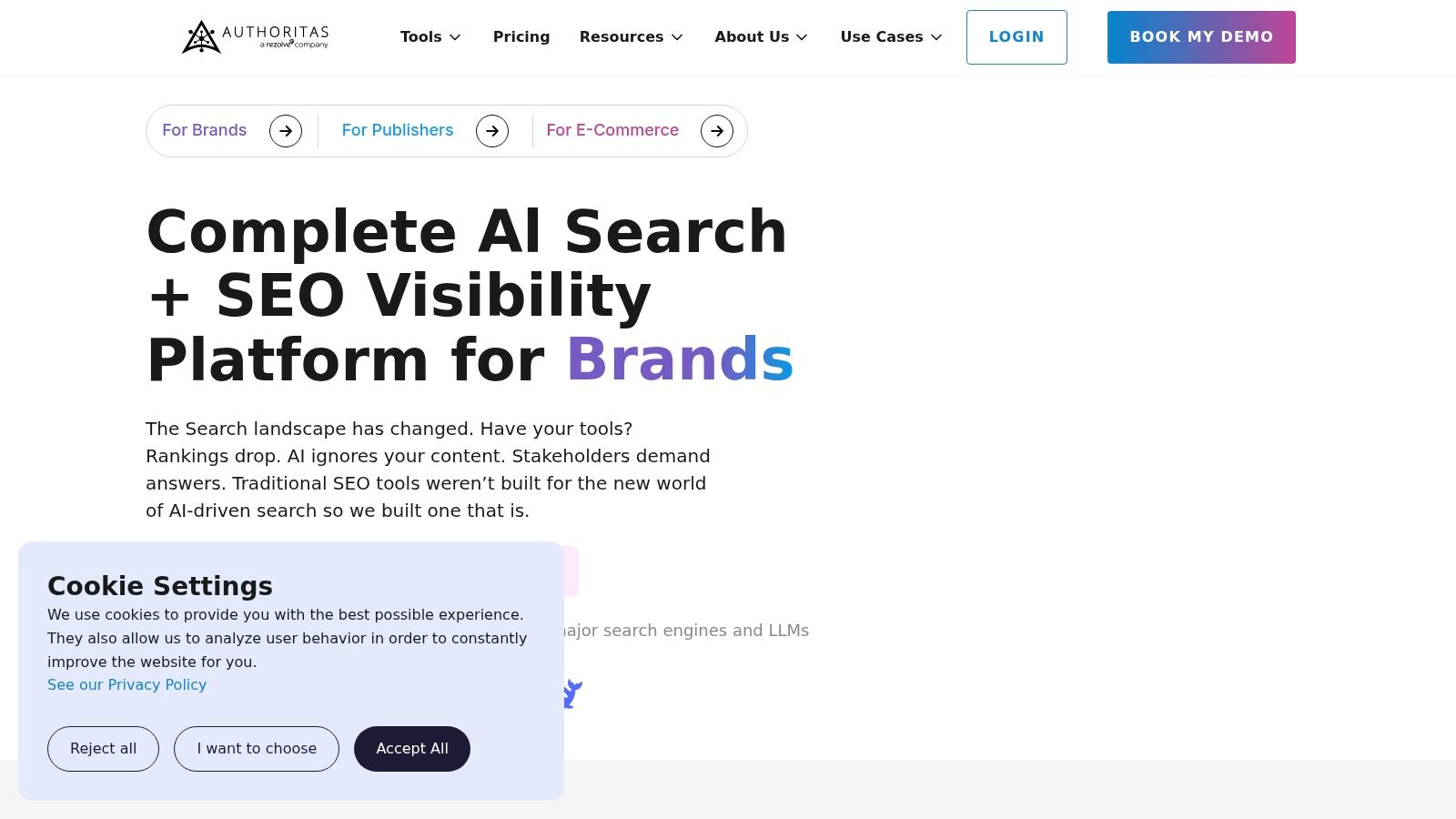
If your business needs evidence you can act on, Authoritas is a sensible place to start. It is a UK-built platform with dedicated AI Overview reporting, and that local context matters when you are checking city-level or region-level performance for e-commerce, publishers, or multi-location service brands. For owners who need to see exactly where visibility moved, it gives you a clearer basis for decisions than a vague summary dashboard.
Why it stands out for UK operators
The rank tracking goes deep on country, region, city, and language granularity. That helps if you sell across the UK and need to spot local shifts instead of relying on national averages that hide what is happening on the ground. The AI Overview reporting adds appearance flags, timeline comparisons, and extraction of AIO content for tracked keywords, so you can inspect what was surfaced rather than taking a generic alert at face value.
Authoritas also fits teams that care about reporting discipline and repeatable search analysis. It is more enterprise-leaning, so the interface and workflow suit businesses that already use structured reviews, tracking routines, and API access. A solo operator can use it, but it may feel like more platform than necessary at the start.
The value is in proof. Use it when you need evidence to support a content refresh, category change, or local SEO spend, especially if a client or internal stakeholder wants more than opinion. The trade-off is straightforward, pricing is custom, and the fit is strongest for teams that want depth rather than simplicity.
- Good for: UK e-commerce, publishers, and multi-location businesses that need detailed AI Overview evidence.
- Watch out for: enterprise complexity if you only need a simple daily dashboard.
- Website: Authoritas
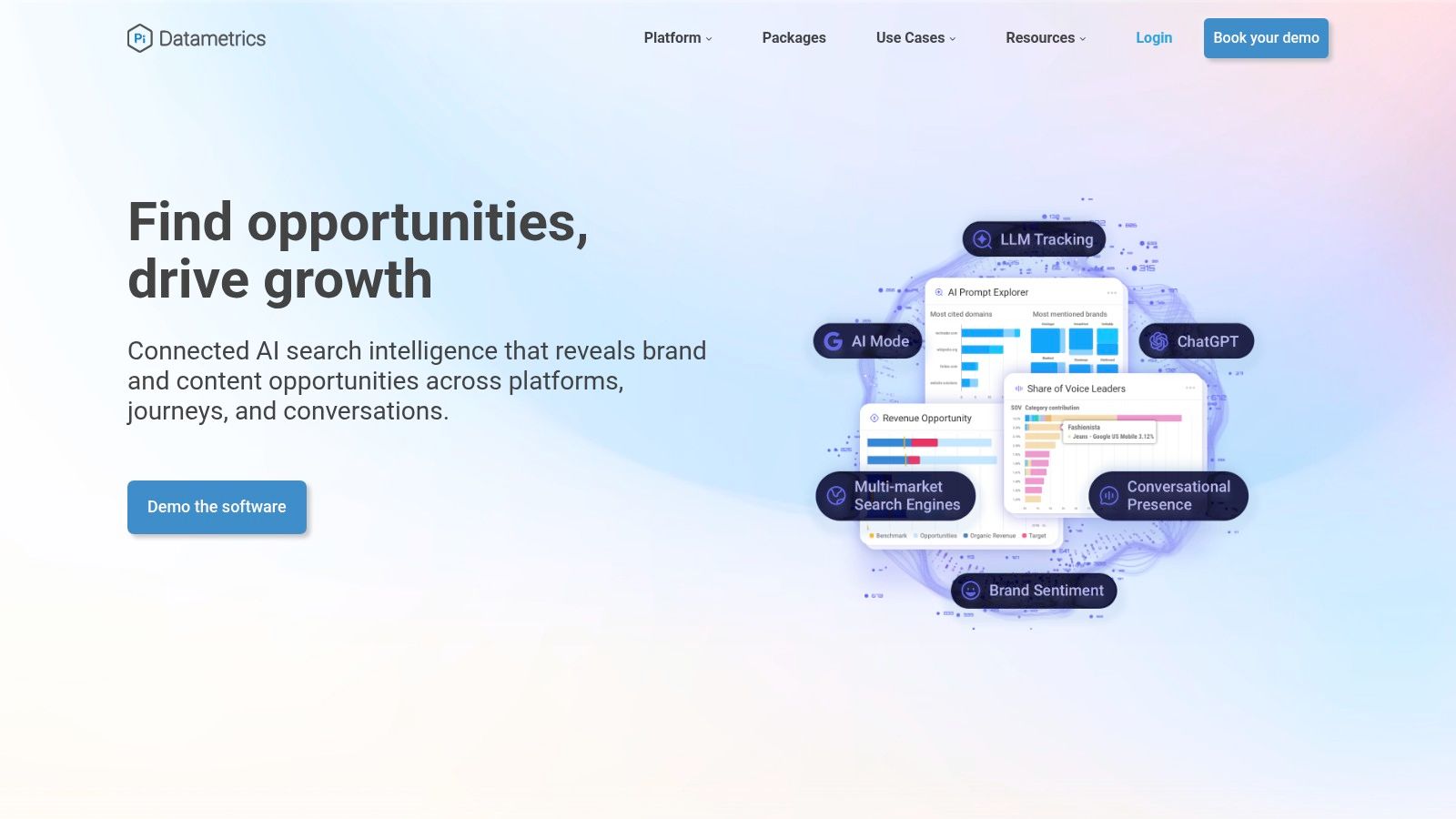
3. Pi Datametrics
Pi Datametrics is for teams that need visibility they can explain, not just a list of keyword positions. Its AI Overview tracking sits alongside Share of Voice, cited URLs, and feature presence, so the reporting fits the way many UK retailers, publishers, and in-house search teams already discuss performance. If your conversations centre on business impact and competitor movement, the platform gives you evidence you can use.
Why UK teams keep it on the shortlist
The terminology will feel familiar to UK reporting teams. That matters more than it sounds, because adoption often fails when a platform asks people to rethink how they already report on search. Pi Datametrics uses language that sits comfortably inside commercial review meetings, so analysts can spend less time translating the output and more time using it.
Its AI Overview measurements are built into the wider reporting structure, rather than sitting in a separate corner of the product. That reduces the chance of a useful feature being ignored because it needs a different workflow, a different login habit, or a separate weekly review. For busy teams, that integration is often the difference between insight that gets shared and insight that disappears.
The other strength is practical depth. Pi Datametrics suits organisations that need to track visibility over time, compare branded and non-branded terms, and show how search features affect share of attention. It is more comfortable in a structured reporting environment than in a casual, quick-check dashboard.
There is a trade-off. Pi Datametrics sits in the enterprise end of the market and comes with an expert layer around it, so it is better suited to teams with a clear reporting process than to a business that wants something light and self-explanatory. If you are a UK small business, the value is strongest when you already have someone managing search properly, or when you pair the tool with a professionally run 1stNet AI website so the content and technical setup are ready to act on the insight.
- Good for: UK retailers, publishers, and commercial teams that need visibility reporting they can defend in meetings.
- Watch out for: enterprise positioning and a workflow that suits structured analysis more than casual use.
- Website: Pi Datametrics
4. BrightEdge AI Catalyst + Generative Parser
BrightEdge places AI visibility on top of a mature enterprise SEO stack, so it suits larger teams that need governance, integration, and structured workflows around their monitoring. It tracks AI Overviews and brand presence across Google AI surfaces and other assistants, while also helping teams work out which content opportunities are most likely to matter. If your organisation already runs search with clear ownership and reporting rules, BrightEdge fits that setup.
Where BrightEdge earns its place
The main strength of BrightEdge is the combination of AI Catalyst and its wider data infrastructure. It is more than a visibility layer, it can connect AI research to existing enterprise SEO processes, which helps when a team needs to move from insight to action without shuffling data between multiple spreadsheets.
It also holds up well for longitudinal analysis. Its research-led layer helps teams see how AI answer surfaces change over time, which is useful when you are planning content strategy rather than reacting to one day’s results. For enterprise marketers, that context is often more useful than another alert.
That depth comes with trade-offs for smaller firms. BrightEdge is broad, expensive, and aimed at bigger teams with established governance needs. Some of the useful AI data also sits inside research and structured workflows, so the platform only pays off when someone is ready to manage it properly. For a UK small business, that usually means pairing the tool with a professionally managed local SEO strategy, or with a 1stNet AI website that already has the content and technical foundations in place.
- Good for: larger UK teams that need AI visibility tied to enterprise SEO reporting and governance.
- Watch out for: cost, complexity, and insight depth that may sit in research layers rather than simple daily monitoring.
- Website: BrightEdge
5. SE Ranking AI Results / AI Search Toolkit
SE Ranking is a practical fit for UK small businesses and agencies that want AI search visibility inside a platform they can run day to day. It brings AI Overviews and LLM visibility into the same workspace as keyword research and rank tracking, so you are not jumping between tools to understand what is happening.
That matters because the work is rarely just about counting mentions. SE Ranking shows which queries trigger AIO, tracks brand citations across ChatGPT, Gemini, and Perplexity, and highlights where organic listings overlap with AI answers. That overlap gives you a cleaner way to decide which pages deserve attention first. If a page already has search traction, it is often the quickest route to better AI visibility.
There is a practical budgeting angle too. The platform sits in a more reachable price range than the bigger enterprise suites, which makes it a realistic option for firms that need results without a long procurement cycle. The AI feature set is still moving, so you are buying into a product that is actively adjusting to a fast-changing market rather than one that has settled into a fixed shape.
The trade-off is capability at the top end. Deep governance, very complex reporting, and heavy executive workflows are not its strongest lane. AI modules and API usage can also move the cost up if you rely on them heavily, so the final bill depends on how ambitious your rollout becomes.
For UK small businesses, the sensible approach is to use SE Ranking as a decision tool, not a vanity dashboard. Pair it with a professionally managed [1stNet AI website](https://1stnet.ai/how-to-increase-website-traffic/) that has clear service pages, solid technical basics, and content built to support both search engines and AI answer systems. That combination gives you a better chance of turning visibility into enquiries rather than just watching citations rise.
- Good for: small businesses and agencies that want AI visibility inside a broader SEO platform.
- Watch out for: lighter enterprise controls and rising costs if you use the AI features heavily.
- Website: SE Ranking
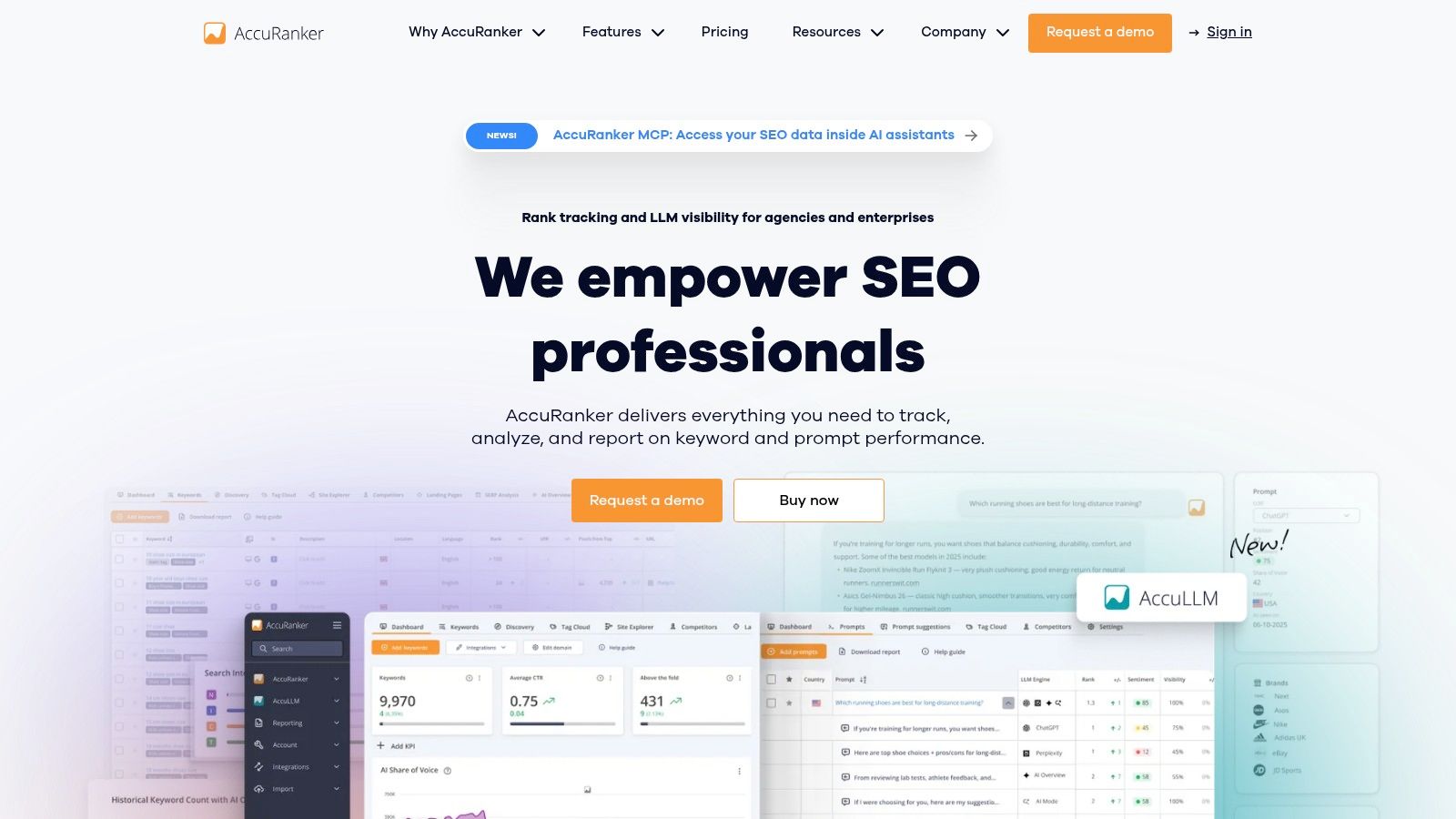
6. AccuRanker AccuLLM + AIO Page
A local service firm does not always need a sprawling platform to keep track of AI search visibility. Sometimes the better choice is a tool that gives you fast rank data, clear pricing, and enough AI coverage to see what is happening without turning reporting into a chore. That is the lane AccuRanker occupies.
Its AI Overview hub and AccuLLM layer add visibility across ChatGPT, Perplexity, Google AI, and AI Mode, so you can monitor classic ranking movement alongside AI answer presence in one workflow. For owners and marketers who check performance regularly, the appeal is obvious. You get a cleaner view of what is shifting, and you spend less time digging through menus.
Where AccuRanker fits best
The main strength is speed. Daily reporting and a responsive interface matter when you want to spot movement quickly and act before a dip becomes a wider problem. If your team is balancing SEO, sales enquiries, and content updates, a tool that gets to the point quickly is worth more than a crowded dashboard.
The 14-day refund policy makes it easier to test without locking yourself into a long commitment. That is useful for UK small businesses, where tooling decisions often have to be justified fast and a poor fit can steal attention from work that brings in leads. Straightforward onboarding and transparent pricing help keep the risk lower while you work out whether the AI layer suits your mix of pages and targets.
The trade-off is scope. AccuRanker is focused on monitoring, not on trying to be a full marketing suite with deep content, backlink, and workflow modules attached. If you need one system to handle everything, you will probably still need to pair it with other tools.
That narrower focus can be an advantage if you want discipline rather than noise. A measured setup, paired with a professionally managed 1stNet AI website that has clear service pages, sound technical foundations, and content built to support both search engines and AI answer systems, gives a small business a better chance of turning visibility into enquiries. In practice, AccuRanker then becomes the monitoring layer, not the whole strategy.
- Good for: small businesses and agencies that want fast rank tracking and AI visibility in a focused tool.
- Watch out for: limited broader suite features if you need content, backlink, and workflow tools in the same place.
- Website: AccuRanker
7. Semrush Position Tracking + AI Visibility Toolkit Semrush One
For teams already living inside the Semrush SEO stack, Position Tracking and the AI Visibility Toolkit or Semrush One bundle let you add AI visibility without changing day-to-day habits. Position Tracking flags AI Overviews on SERPs, and the AI Visibility Toolkit extends that into brand mentions across Google AI and LLMs. If your team already checks Semrush every day, the appeal is obvious.
What the platform does best
Integration is the main strength. AI metrics sit beside keyword research, backlink data, and content workflows, so you are not jumping between separate tools to see how search performance and AI visibility relate. For agencies and marketing teams already committed to the ecosystem, that reduces friction more than a niche AI-only dashboard can.
Semrush also has the research depth and documentation many smaller tools lack. That helps smaller teams make quicker calls because the platform is familiar, widely used, and easier to hand over when staff change. If someone leaves, a replacement can usually pick it up without a long handover.
There is a trade-off, and it is cost creep. Add-ons, seats, and higher-tier bundles can turn a familiar platform into a costly one before you notice. The AI visibility pieces are useful, but the real question is whether your business will use enough of the wider Semrush stack to justify the spend.
For UK small businesses, the best fit is usually a team that already relies on Semrush for rankings, audits, or content planning and wants AI search reporting folded into the same workspace. If you need help getting a brand visible in AI results, this guide on how to get your business featured in ChatGPT, Google Gemini and AI search results explains the wider setup work that sits behind the tool itself. A professionally managed 1stNet AI website with clear service pages, clean technical foundations, and content written for both search engines and AI answer systems gives those reports somewhere useful to lead.
- Good for: teams already using Semrush who want AI visibility added inside the same platform.
- Watch out for: add-on and seat costs that can push the package beyond what a small business needs.
- Website: AccuRanker
8. Don’t just track visibility
Semrush suits teams that already rely on its SEO toolkit and want AI visibility reporting without changing their day-to-day workflow. Its Position Tracking flags AI Overviews on SERPs, and the AI Visibility Toolkit or Semrush One bundle extends that monitoring into brand mentions across Google AI and LLMs. For a busy UK small business, that can be the difference between using the data and letting another dashboard sit ignored.
Where it fits well, and where it does not
The strongest point is the way it sits alongside keyword research, backlink tools, and content workflows. That keeps AI metrics in the same place as the rest of your SEO work, which reduces hand-offs and helps marketing teams make quicker calls. Agencies tend to value that more than a separate AI-only dashboard, especially when they need one system to cover reporting, audits, and planning.
Semrush also brings more documentation and market familiarity than many niche tools. That matters if you want a platform staff can pick up quickly, or one a new agency partner can work with without wasting time on onboarding. For owner-managed businesses, that familiarity can save time when roles change or projects move between people.
The trade-off is cost creep. Add-ons, seats, and higher-tier bundles can turn a familiar platform into an expensive one before you notice. The AI visibility features also sit far enough away from the core plan that buyers need to check exactly what is included, rather than assuming the whole stack comes as one package.
That leaves a simple decision. If you want one platform that combines measurement, research, and AI visibility, Semrush is easy to justify. If you only need AI search reporting, a specialist tool may be better value.
Pair it with a professionally managed 1stNet AI website, because tracking alone does not improve visibility. Clear service pages, tidy technical foundations, and content written for both search engines and AI answer systems give Semrush something useful to measure, and something more useful to improve.
- Good for: teams already invested in Semrush who want AI visibility inside a familiar workflow.
- Watch out for: add-on costs and AI features that sit apart from the base package.
- Website: Semrush
9. WordLift
WordLift is the most structural tool on this list, which is exactly why some businesses need it. It’s not a rank tracker. It’s a semantic SEO and knowledge graph platform that helps you understand which entities and topics your site is being cited for, then closes gaps with structured data, internal linking, and schema automation. If your site is content-rich, product-heavy, or built on technical publishing, that can be powerful.
Why it matters for AI visibility
AI systems don’t just read keywords, they assemble meaning from entities, structure, and source relationships. WordLift is useful because it helps turn a website into something easier for machine systems to understand. That includes JSON-LD, RDF, GraphQL, and a managed knowledge graph approach that suits teams who want more control over structure.
The upside is citation readiness. If your content is clearly organised and machine-readable, it stands a better chance of being understood and cited by AI systems. That’s especially relevant for businesses with deep service pages, product catalogues, or layered educational content.
The limitation is obvious. You still need a separate visibility tracker if you want to measure performance over time. WordLift helps improve the site, but it doesn’t replace a monitoring tool. For many firms, that means pairing it with something like SE Ranking, SISTRIX, or Semrush.
Practical rule: improve the site before you obsess over the dashboard. If your pages are thin, messy, or poorly structured, AI visibility tools can only tell you that you have a content problem, not fix it for you.
- Good for: teams that want semantic structure, schema automation, and entity-based optimisation.
- Watch out for: needing a second tool for rank or AI visibility monitoring.
- Website: WordLift
Top 10 AI Search Visibility Tools, Feature Comparison
| Tool | Core features ✨ | AI / AIO strength 🏆 | Target audience 👥 | Pricing & quality 💰 ★ |
|---|---|---|---|---|
| SISTRIX | UK Visibility Index, rank tracking, domain overviews ✨ | AIO detection available but tracked separately (not in headline Visibility) | UK agencies & SMBs 👥 | 💰 Mid · ★★★★ |
| Authoritas | AIO flags & extraction, granular rank tracking, API ✨ | Dedicated AIO reporting & timeline comparisons 🏆 | UK e‑commerce, publishers, enterprise 👥 | 💰 Quote-based · ★★★ |
| Similarweb Rank Tracker (Rank Ranger) | Daily rank tracking, Share‑of‑Search, device/location filters ✨ | AIO presence per keyword; scales for multi‑market reporting 🏆 | Enterprise analytics teams 👥 | 💰 Opaque/enterprise · ★★★★ |
| Pi Datametrics | Feature Explorer (Share of Voice), cited URLs, multi‑market tracking ✨ | AIO integrated into dashboards for SOV & feature presence 🏆 | UK retailers & publishers 👥 | 💰 Enterprise/quote · ★★★ |
| BrightEdge | AI Catalyst, DataCube analysis, AIO trend research ✨ | Strategic AIO monitoring across assistants, longitudinal insights 🏆 | Large enterprises & global brands 👥 | 💰 High · ★★★ |
| seoClarity | Real‑time AI citation tracking, cross‑LLM monitoring, alerts ✨ | Purpose‑built cross‑engine AI/LLM visibility & missed‑opportunity framing 🏆 | Enterprises needing LLM awareness 👥 | 💰 Enterprise · ★★★ |
| SE Ranking | AIO Results tracker, organic–AI overlap, prompt‑level LLM checks ✨ | Practical AI modules for SMBs, fast rollout cadence ✨ | SMBs & agencies seeking budget tools 👥 | 💰 Affordable tiers · ★★★★ |
| AccuRanker | Fast refresh rank tracking, AIO text extraction, AccuLLM ✨ | Focused, fast AIO/LLM monitoring for daily workflows ✨ | Teams needing speed & clarity (agencies/SMBs) 👥 | 💰 Transparent/self‑serve · ★★★★ |
| Semrush | Position Tracking + AI Visibility, full SEO stack, research tools ✨ | AIO detection inside a broad marketing suite, add‑on bundles ✨ | Agencies & marketing teams wanting one stack 👥 | 💰 Variable (add‑ons) · ★★★★ |
| WordLift | Knowledge Graph, schema automation, entity/AIO gap analysis ✨ | Improves likelihood of AI citations via structured data ✨🏆 | Publishers & commerce sites needing structured data 👥 | 💰 Tiered SaaS · ★★★ |
Choosing Your Tool and Building an AI-Ready Website
The right choice depends on what problem you’re trying to solve. If you want a straightforward all-in-one option, SE Ranking and AccuRanker are practical starting points. If you need deeper UK benchmarking or competitive reporting, SISTRIX and Pi Datametrics are stronger fits. If you’re an enterprise team that needs AI visibility folded into a broader stack, BrightEdge, seoClarity, Similarweb, and Semrush deserve attention. If your site needs the structural work that makes AI citation more likely, WordLift fills that gap better than a dashboard ever will.
But a tool alone isn’t a strategy. AI visibility depends on whether your website can be read, trusted, and cited by search systems, and that means the basics still matter. Google’s Search Central guidance says structured data can help search engines understand content and schema can make pages eligible for rich results, while crawlable text, descriptive headings, and accessible links help automated systems understand the main content. If the site is slow, hidden behind awkward scripts, or poorly structured, the nicest tool in the world won’t save it.
The legal and privacy side matters too for UK businesses. Commercial sites need the right disclosure details under the Electronic Commerce (EC Directive) Regulations 2002, and if you handle distance sales or online bookings, the Consumer Contracts Regulations 2013 give customers a 14-day cooling-off right. If you use non-essential cookies, live chat, or marketing trackers, the ICO says consent must be valid, informed, and easy to refuse. Those aren’t box-ticking issues, they affect whether your launch is compliant and whether your site is safe to run at scale.
That’s why a professionally managed website often works better than a rushed DIY build. A properly handled launch gives you the domain, SSL, hosting, maintenance, and the on-page structure needed for AI discovery from day one. If you want the website itself to support your visibility work, not fight it, a managed build is usually the more sensible investment.
1stNet AI Ltd fits that practical end of the market. It’s a UK-based team for small and growing businesses, with website design and development, hosting, SSL, maintenance, and AI-search-friendly structure included, so you’re not stitching together ten suppliers before you’ve even started. If your goal is to launch quickly and make the site usable for both people and AI systems, that combination is hard to ignore.
If you want a website that’s built to support AI search visibility from the start, 1stNet AI Ltd can design, launch, and maintain it for you. They handle the infrastructure, the structure, and the ongoing support so you can focus on enquiries instead of site maintenance. If you’re ready to turn AI visibility into something your business can use, visit their site and ask about a managed build.